


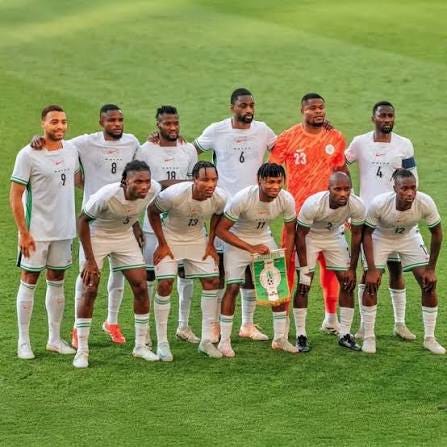
Russian football analysts are worried. They have acknowledged the Super Eagles’ form ahead of an October international friendly. Their concern is specific: Russia’s defence against Nigeria’s attack. The admission is unusual. Russian football media rarely praise African opponents before a match.
Nigeria and Russia have rarely met. The Super Eagles have a strong attacking tradition: Jay-Jay Okocha, Nwankwo Kanu, Rashidi Yekini, Victor Osimhen. Russia’s national team has been isolated from major tournaments since 2022, when FIFA and UEFA suspended it following the invasion of Ukraine. Friendly matches are now its main competitive outlet.
The current friendly matters for both sides. For Nigeria, it is a test against a European opponent outside the usual African qualifying circuit. For Russia, it is a chance to measure its defence against a fast, physical attack. The Russian analysts’ concern reflects Nigeria’s forward line: Osimhen, Ademola Lookman, Victor Boniface. These are players who punish defensive errors.
The tactical question is whether Russia can handle pace. Nigerian attackers are quick, direct and strong in the air. Russian defenders have struggled against similar profiles in the past. The analysts’ comments suggest they have watched the footage. The friendly will show whether the concern is justified.
For Nigeria, the match is a warm-up for AFCON qualifiers. For Russia, it is a credibility exercise. For fans, it is a rare intercontinental fixture with no qualifying stakes. Without pressure, it becomes a pure test of tactics and talent.
Winners: Nigerian football, which gains recognition. Fans, who get a marquee friendly. Players, who earn caps and exposure. Russian football, which gets a competitive opponent. Losers: Russian defenders, who face a difficult assignment. Clubs that release players during a congested calendar. CAF, which loses players to a non-qualifying match.
Bottom Line: Russia fears Nigeria’s attack. That is a compliment. The friendly will show if it is justified.