


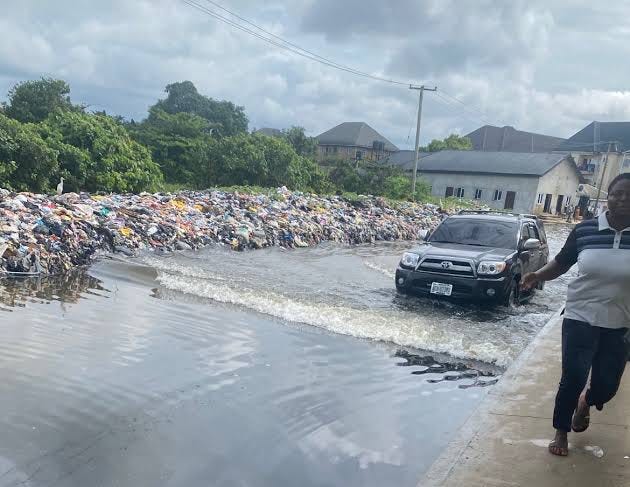
The Rivers State House of Assembly suspended all legislative business on Thursday to inspect communities submerged by flash floods in Port Harcourt and Obio/Akpor Local Government Areas.
The decision followed a motion of urgent public importance moved by Deputy Majority Leader Linda Somiari-Stewart at the 55th Legislative Sitting of the Fourth Session. She said residents’ property and means of livelihood had been destroyed, and warned that poisonous reptiles now occupied submerged homes.
Speaker Martin Amaewhule expressed profound sympathy to residents and urged members to visit their constituencies and provide palliatives where possible. Lawmakers voted unanimously to inspect the affected areas.
After the inspection, Amaewhule said the visit was prompted by distress calls from constituents. “What we have seen clearly shows that flooding requires urgent attention,” he said. Many families have been displaced, and several roads have become inaccessible.
The Assembly identified two causes. Some flooded locations resulted from blocked canals and neglected drainage channels. Others were the result of natural water flow. Amaewhule said agencies responsible for desilting drains must be alive to their responsibilities to prevent avoidable flooding.
This mirrors the recurrent flooding crises that have hit Nigerian cities in recent years, from Lagos to Lokoja to Bayelsa. The difference now is that a state legislature has suspended its own business to confront the problem directly. That is a signal. It suggests the flooding is severe enough to override normal legislative priorities.
The human stakes are immediate. Residents in submerged communities have lost homes, property and livelihoods. Poisonous reptiles in flooded homes add a public health risk. Children cannot attend school. Businesses cannot operate. The Assembly’s inspection will produce a report. The question is whether it will produce action.
Winners and Losers
Winners: The Rivers State House of Assembly, which demonstrates responsiveness to constituents. Residents of flood-affected communities, who gain a legislative platform for their plight.
Losers: Residents of Port Harcourt and Obio/Akpor, who face displacement and property loss. The state government, whose drainage maintenance record now faces scrutiny. Taxpayers, who fund agencies that failed to desilt canals before the rains.
Bottom Line: A blocked drain is not a natural disaster. It is a governance failure. The Rivers Assembly has seen the problem. The test is whether it allocates the resources to fix it