


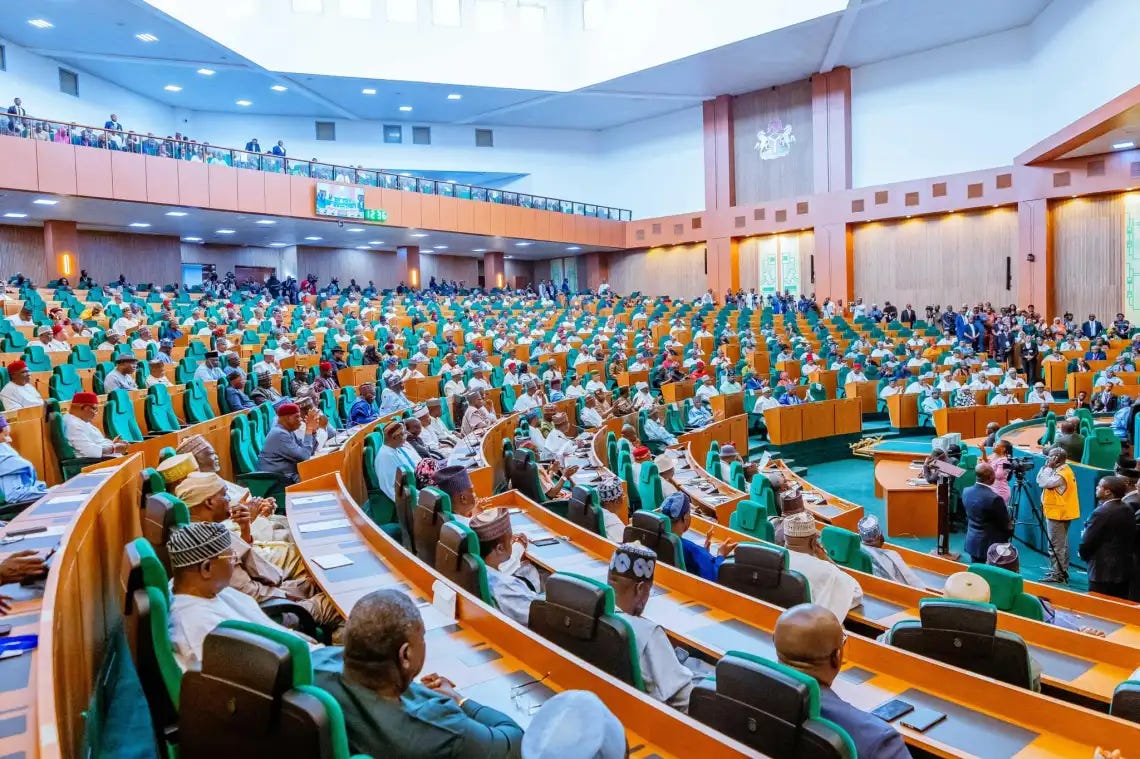
The House of Representatives has asked President Bola Tinubu to consider declaring a state of emergency in Delta State if recurring political violence escalates into a breakdown of public order and safety.
The resolution followed a motion of urgent public importance sponsored by Benedict Etanabene, who represents Okpe/Sapele/Uvwie Federal Constituency, during Wednesday’s plenary on November 25.
The lawmakers also called for a special police investigation into successive attacks on political gatherings across the state, demanding the arrest and prosecution of those responsible, including their sponsors and financiers.
The latest incident that prompted the intervention occurred on November 23 at Uduere community in Ughelli North Local Government Area. The attack targeted campaign activities associated with former Deputy President of the Senate, Ovie Omo-Agege, and left six people dead and several others injured.
Omo-Agege, who is the Nigeria Democratic Congress (NDC) senatorial candidate for Delta Central, reportedly escaped unhurt.
Moving the motion, Etanabene warned that repeated attacks had created fear among political parties, candidates, supporters and residents. He said the violence threatened citizens’ constitutional right to participate in democratic activities.
He recalled that a political procession along Nnebisi Road in Asaba on November 7 ended in violence, leaving one person dead and five others injured, according to police figures.
He also cited an attack on a political party’s campaign team at Okpai, Ward 4, Ndokwa East Local Government Area, on November 11, which reportedly left five people injured.
Another incident occurred in September during a political mobilisation exercise in Effurun, Uvwie Local Government Area. A participant sustained machete injuries and later died in hospital.
WHAT THE HOUSE WANTS TINUBU TO DO
The lawmakers urged Tinubu, in his capacity as Commander-in-Chief of the Armed Forces, to direct security agencies to take immediate measures to prevent further attacks and loss of lives.
They specifically asked the Inspector-General of Police to deploy adequate personnel, including tactical and intelligence units, to identified security flashpoints across Delta.
The House also demanded a comprehensive and impartial investigation into all reported attacks on political activities. The investigation, according to the lawmakers, should identify not only those who carried out the attacks but also their sponsors and financiers.
They further called on the police and other security agencies to protect political rallies, campaigns and processions, regardless of the political parties organising them.
Etanabene warned that security operatives must not remain passive when political gatherings come under attack.
“The police, when present, should not act as bystanders, watching the unfolding chaos,” he said.
The House also asked the Inspector-General of Police to invite all governorship candidates in Delta for a meeting on the constitutional provisions and Electoral Act governing political campaigns.
In another resolution, lawmakers directed four committees, Police Affairs, National Security and Intelligence, Electoral Matters, and Political Parties Matters, to engage security agencies and report back within two weeks with recommendations.
They also urged the Federal Government to provide medical assistance and other support to victims and families of those killed.
EMERGENCY RULE IS NOT YET DECLARED
The most consequential part of the resolution concerns Section 305 of the 1999 Constitution, as amended.
The House asked Tinubu to monitor developments and consider invoking the provision if the situation reaches the constitutional threshold of an actual or imminent breakdown of public order and public safety.
Section 305 provides the framework for declaring a state of emergency under specified circumstances. Such a declaration is subject to constitutional procedures, including consideration by the National Assembly.
However, the lawmakers have not asked Tinubu to declare emergency rule immediately. Their position is that the President should consider the option if the violence deteriorates further.
The intervention follows other government responses to the November 23 killings. The Nigeria Police Force confirmed on November 24 that six people died and several others were injured. The Inspector-General of Police subsequently ordered an investigation, including an examination of the conduct of officers deployed to the scene.
The Delta State Government also imposed a dusk-to-dawn curfew across Ughelli North Local Government Area and directed security agencies to arrest those responsible.
The immediate concern is the safety of political candidates, campaign workers, supporters and residents. The police and other security agencies face pressure to identify those responsible and establish whether any security failures contributed to the attacks. Political parties also have a responsibility to ensure that their activities do not become flashpoints for violence.
With the 2027 general elections approaching, the incidents raise questions about whether political competition in Delta can proceed without intimidation and bloodshed.
Bottom Line: The House has raised the possibility of emergency rule in Delta, but its immediate demands are stronger policing, investigations and prosecution. Whether these measures can prevent another attack will be an important test of the state’s security response ahead of the 2027 elections.