


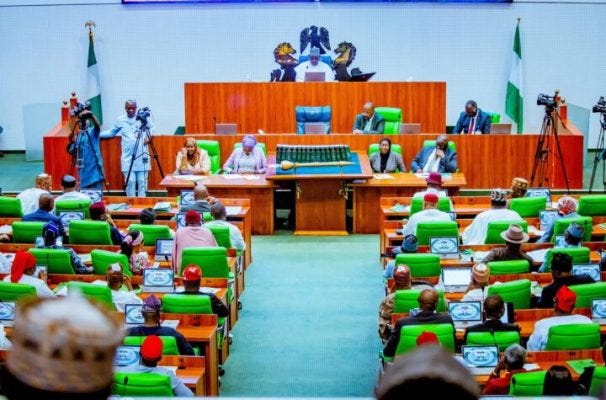
The House of Representatives has summoned the chief executive officers of Nigeria’s telecom operators. They must appear before the House Ad hoc Committee on 28 October. The committee is investigating the persistent decline in service quality and customer experience. The directive was issued on Wednesday. It followed the adoption of two motions. Rep. Sunday Umeha (APC-Enugu) and Rep. Afam Ogene (NDC-Anambra) moved the motions. The CEOs of MTN, MAFAB and other service providers had failed to honour previous invitations. They sent lower-ranking staff instead.
Nigeria’s telecom sector has expanded rapidly since the 2001 GSM auctions. Subscriber numbers climbed past 200 million. Regulation lagged behind adoption. The NCC introduced the Consumer Code of Practice in 2018 and the Quality of Service Business Rules in 2024. Enforcement has been uneven. In the first half of 2026, operators received 413,587 complaints. Airtel recorded 228,992. MTN followed with 124,405. Globacom had 56,810. T2mobile recorded 3,885. In April 2026, the NCC began implementing a compensation framework for subscribers affected by poor service. The framework requires operators to compensate customers where quality falls below prescribed standards. A month later, the NCC tied its approval of a 50% tariff hike to measurable improvements in network quality.
The committee directed the Nigerian Communications Commission to ensure the CEOs appear. The operators must submit all relevant documents on or before the hearing date. Lawmakers warned they could issue arrest summonses if any chief executive fails to comply. The committee chairman, Rep. Olumide Osoba (APC-Ogun), said telecom services had consistently declined. He said critical sectors, including Point of Sale operations, depend on telecom networks. He alleged that invited CEOs had offered excuses and sent lower-ranking staff instead of appearing themselves.
Rep. Ibe Osonwa (LP-Arochukwu/Ohafia) criticised the operators. He said it was unacceptable for companies earning substantial revenue from Nigeria to disregard parliamentary invitations. Osoba urged the NCC to ensure compliance.
The investigation follows earlier concerns over poor network quality despite infrastructure investment. In October 2025, the NCC attributed poor service in Lagos, Abuja and other cities to inadequate network capacity in densely populated areas. It called for targeted investment in 5G deployment and 4G upgrades. Mobile network operators and tower companies invested a combined ₦2.5 trillion in network infrastructure in 2025. The complaints have not stopped.
Winners: The House committee, which asserts oversight. Subscribers, if the summons forces accountability. The NCC, which gains a mandate to enforce. Lawmakers, who gain visibility. Losers: The telecom operators, who face public scrutiny. Their CEOs, who must appear or face arrest. The NCC, if it fails to compel attendance. Subscribers, if the hearing produces no service improvement. Investors, if regulatory pressure escalates without a corresponding improvement in the operating environment.
Bottom Line: The House has summoned the CEOs. They must appear on 28 October. The NCC has been ordered to ensure they show up. The threat of arrest is real. The question is whether a parliamentary hearing will fix a network. It will not. But it may force the operators to explain why ₦2.5 trillion in investment has not translated into better service. Subscribers deserve that answer.