


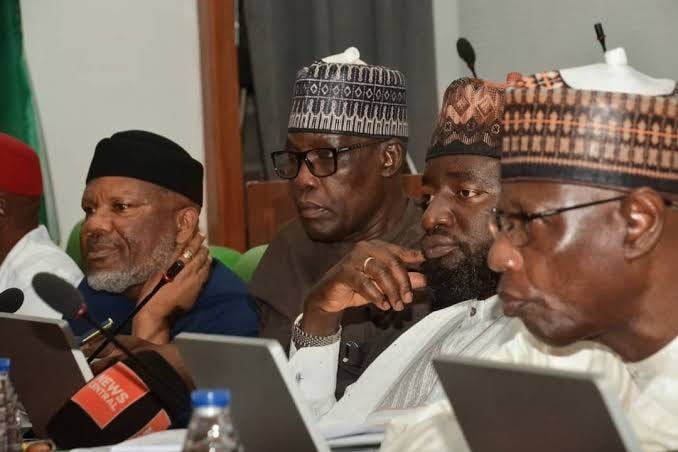
The House of Representatives ad-hoc committee investigating the controversial Presidential Foreign Investment Promotion Council (PFIPC) has uncovered fresh discrepancies in the documents used to establish the alleged agency. At a hearing in Abuja on Thursday, officials from the State House and the Federal Road Safety Corps testified before lawmakers.
The State House’s Director of Administration, Abdulquadri Idris, categorically denied any role in the PFIPC’s creation, stating that the presidency never requested a budget code for the agency. He further dismissed documents submitted to the committee as forged, noting that one of the signatories, Akande Adewale, had never been a Director of Administration in the State House. “We have only the Department of Administration. Akande Adewale has never, ever been Director of Administration in the State House,” Idris said.
The State House submitted official records to support its position, including authentic letterheads and the historical list of Directors of Administration. Committee Chairman Yusuf Gagdi described the contradictions as a significant breakthrough. “The State House has denied that it ever wrote any letter to the Accountant-General requesting budget codes. Secondly, there is no Directorate of Administration and Support Services as contained in those documents,” Gagdi said.
The FRSC defended its decision to allocate seven Official Federal Government vehicle number plates to the PFIPC, insisting that it acted in line with established administrative procedures after carrying out extensive verification. Corps Marshal Shehu Mohammed explained in a memorandum that the process began with a letter dated April 4, 2025.
The PFIPC scandal is a story of contradictions. One agency says it never authorised the creation of the council. Another says it allocated official number plates after due verification. The Accountant-General’s Office, meanwhile, is caught in the middle. This echoes the 2012 pension fraud scandal, when fictitious entities were also embedded in government systems. The difference is that this time, the public is watching.
The winners: the House committee, which has uncovered fresh evidence; and the Nigerian public, who are closer to the truth. The losers: the officials who created or enabled the fake agency; and the Nigerian government, which faces another credibility crisis.
Bottom Line: The State House has disowned the fake agency. The FRSC says it followed procedure. The contradictions keep mounting. The truth remains elusive.