


Anti-immigrant demonstrators marched through Sunnyside, a Pretoria suburb with a large Nigerian population known locally as Little Lagos, on Wednesday. The March and March movement, led by Jacinta Ngobese-Zuma, demanded that the South African government prohibit Nigerians from entering the country. The group’s legal representative, Xolani Zuma, put the demand in explicit terms: “The state must ban Nigerians from South Africa. They must ban Nigerians until they stop selling drugs to our people.” The group also called on South Africa to withdraw from the 1951 UN Refugee Convention.
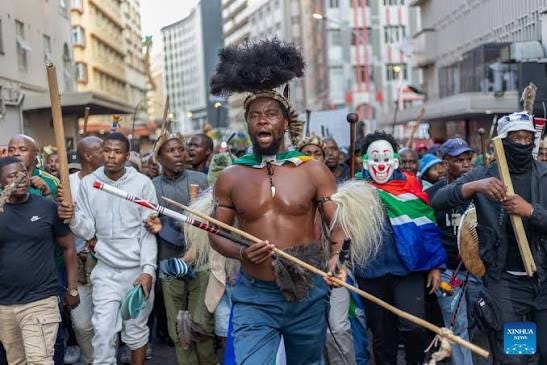
The mechanics of the protest are less important than the official response. South Africa’s government rejected the demand. A spokesperson for the International Relations minister, Phindile Kunene, said the actions of March and March do not represent the position of the government, and that South Africa does not condone the wholesale criminalisation of Nigerians or any other nationality. She acknowledged that the government had raised concerns about the involvement of some Nigerian nationals in drug offences and wire fraud, and that Minister Ronald Lamola had done so with a Nigerian delegation in Abuja in July. That is a careful distinction: a government can raise a law enforcement concern without endorsing a blanket ban. Nigeria’s High Commissioner to South Africa, Olufemi Fani-Kayode, formally conveyed Nigeria’s concerns to the Department of International Relations and Cooperation and to Abuja.
This echoes the 2019 xenophobic violence that targeted Nigerian migrants in Johannesburg and Pretoria, and the longer cycle of anti-immigrant agitation that has produced both violence and diplomatic friction. It also mirrors the domestic political function of such marches, which often peak when South African unemployment and service delivery failures are most visible.
The winners are March and March, which gained the attention it sought, and the South African government, which gets to demonstrate that it rejects blanket bans without conceding that a problem exists. The losers are the Nigerians in Sunnyside who closed their shops and stayed indoors, and the bilateral relationship, which now carries another grievance into the next negotiation over trade and migration.
Bottom Line: A government statement rejecting a march is not the same as a police line protecting the people the march targeted.