


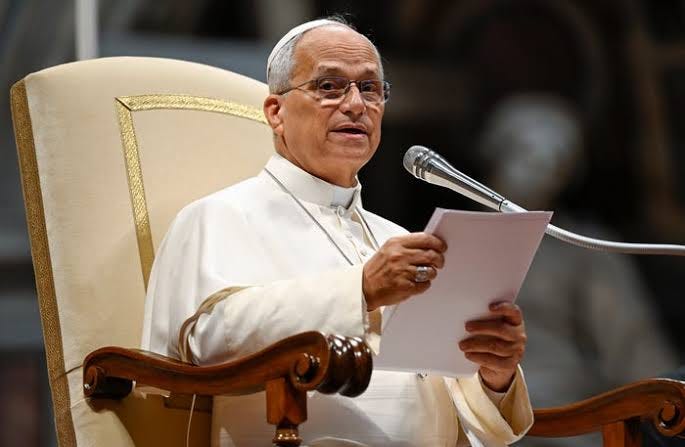
Pope Leo XIV has warned that as artificial intelligence spreads across the globe, technology could be used in subtle ways to dominate. He emphasised that AI's rapid development could create new forms of technological dependency, with poorer nations becoming increasingly reliant on wealthier countries.
“We must be vigilant in this regard, lest innovation become yet another tool of ideological or economic colonialism,” the Pope said on Friday at the International Catholic Legislators Network meeting in the Vatican. The Pontiff noted that the world faces a subtle form of domination every day when algorithms decide who is seen and who is hidden. He argued that this development reveals a new face of the ancient desire for domination and control.
Pope Leo warned that digital platforms must not be allowed to shape public discourse without accountability, and that workers' dignity must not be sacrificed for system optimisation. He urged the Church to advocate for a civilisation of love, where the family is the first school of humanity. “In such a society, the first school for human beings is the family. For it is in the family that we first learn to trust rather than calculate, to give generously rather than compete, to dialogue rather than divide, and to love rather than to exercise power,” he said.
He insisted that AI must not be allowed to erode the basic unit of society, whether by reducing persons and relationships to data and simulations, filling young minds with content that distorts their desires, or enabling economic models that destabilise family life. “Dear friends, the world does not need an artificial intelligence that diminishes humanity; rather, it needs human intelligence enlightened by wisdom, political authority guided by conscience, and technological innovation directed by charity,” Pope Leo stated.
The Pope urged the legislators to develop robust legal frameworks and independent oversight to ensure that no single ideology or interest dictates the values embedded in AI systems. His warning comes as African countries increasingly rely on AI technologies developed in the West. The Pope’s message reminds us that technology is not neutral, and that AI governance must be shaped by ethical principles, not just market forces.
The winners: advocates for ethical AI, who have a powerful voice in the Pope’s warning; and the international community, which must now address the risks of AI colonialism. The losers: tech companies that seek to dominate without accountability; and poorer nations, which risk becoming dependent on AI technologies they do not control.
Bottom Line: The Pope has warned that AI could become a tool of colonialism. The question is whether the world will listen before it is too late.