


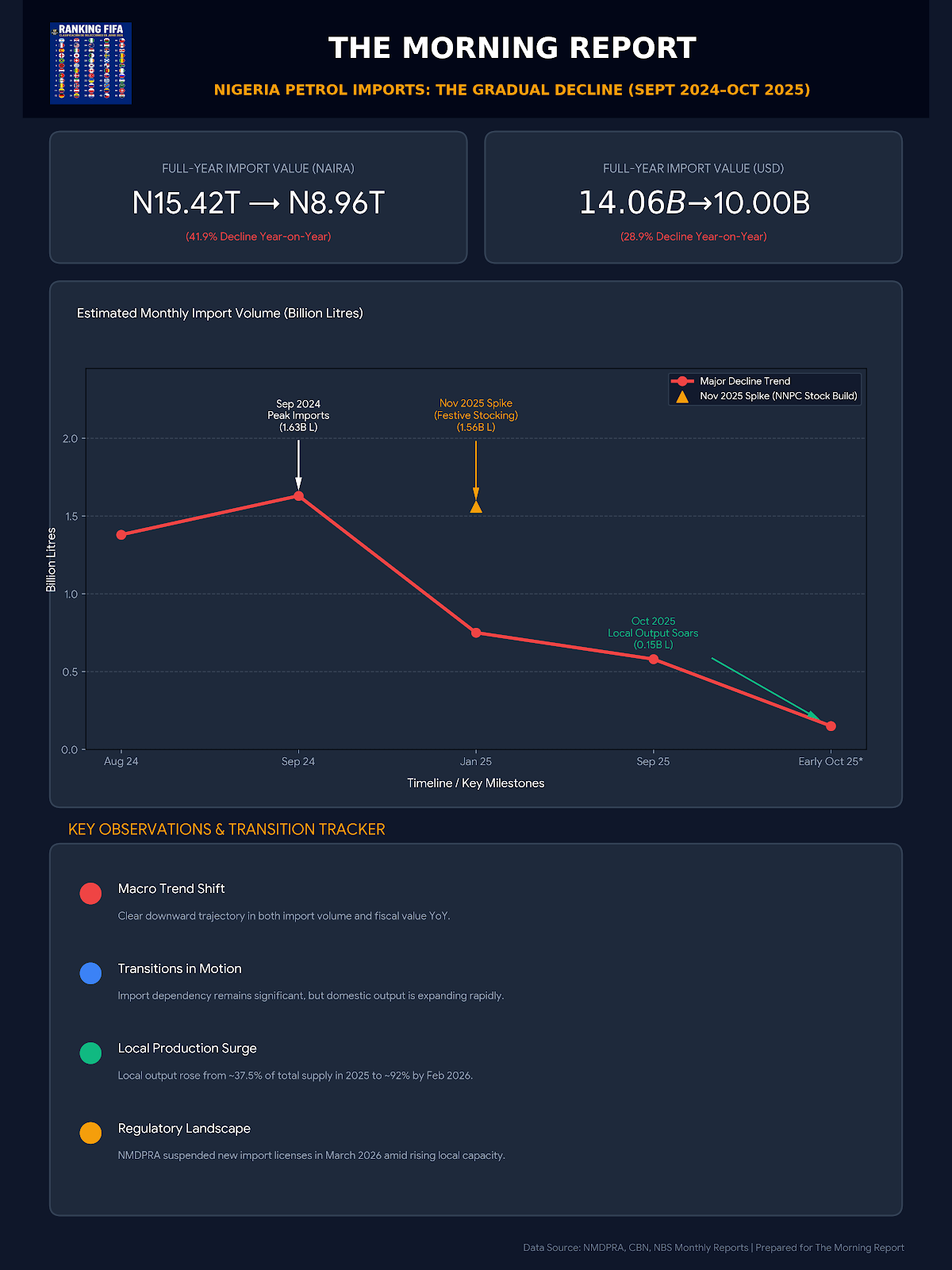
Nigeria’s petrol imports more than tripled in June as the Dangote Petroleum Refinery diverted a significant portion of its production to export markets, reversing recent progress in reducing the country’s reliance on imported fuel. According to the Nigerian Midstream and Downstream Petroleum Regulatory Authority (NMDPRA), petrol imports surged from 5.6 million litres per day in May to 18.1 million litres per day in June.
The development represents a dramatic reversal of the trend seen earlier this year when the 650,000-barrel-per-day Dangote refinery supplied about 90% of Nigeria’s petrol needs in May. Domestic supply fell 21.7% to 32.5 million litres per day in June, down from 41.5 million litres per day in May.
Devakumar Edwin, Vice President of Dangote Industries Limited, confirmed that the refinery has been forced to prioritise exports because it cannot obtain sufficient foreign exchange to procure crude oil. “We are exporting as much as possible. We are not able to get enough dollars from the Central Bank, and it doesn’t make any sense to be selling the products in naira and not being able to buy dollars. We need the dollars to buy our feedstock.” He added that the refinery was receiving “very little” crude under the naira-for-crude arrangement, limiting its ability to sustain domestic supply.
The situation highlights the challenges facing the naira-for-crude initiative introduced in 2024 to enable local refiners to purchase crude in naira and reduce pressure on Nigeria’s foreign exchange reserves. Ikemesit Effiong, managing partner and head of research at SBM Intelligence, warned that Nigeria could slip back into dependence on imported petrol if domestic refineries continue to prioritise exports. “The NNPC’s failure to supply sufficient crude to Dangote may compel the refinery to import crude and sell refined products abroad, leaving the domestic market underserved and creating incentives for imports.”
For Nigerian consumers, the development is a worrying sign. The country had hoped that the Dangote Refinery would end decades of dependence on imported fuel, but the latest data suggests that the refinery’s commercial incentives are pulling in the opposite direction. Export sales generate the foreign currency needed to purchase feedstock, while domestic sales generate naira that cannot easily be converted into dollars.
This mirrors the 2022 fuel import crisis, which exposed Nigeria’s vulnerability to global crude price volatility. The mechanism then was different, but the result was the same: a country struggling to secure fuel for its citizens.
The winners: Dangote Refinery, which is earning dollars from exports; and the Nigerian government, which receives taxes from imports. The losers: Nigerian consumers, who may face higher petrol prices; and the Nigerian economy, which suffers from increased import dependence.
Bottom Line: Nigeria’s petrol imports have tripled because Dangote is exporting for dollars. The refinery needs foreign exchange to buy crude. The domestic market is losing out. The question is whether this is a temporary shift or a permanent change.