


Petrol prices have risen across Nigeria. They have reached as high as ₦1,500 per litre in several states. Some locations report prices above ₦1,700. The Nigeria Labour Congress (NLC) urged the Federal Government to cushion the impact. It proposed wage awards, increased naira-denominated crude supplies to local refineries and stronger petroleum reserves. Fuel marketers warned prices could reach ₦2,000 per litre if international crude prices and exchange rate pressures persist.
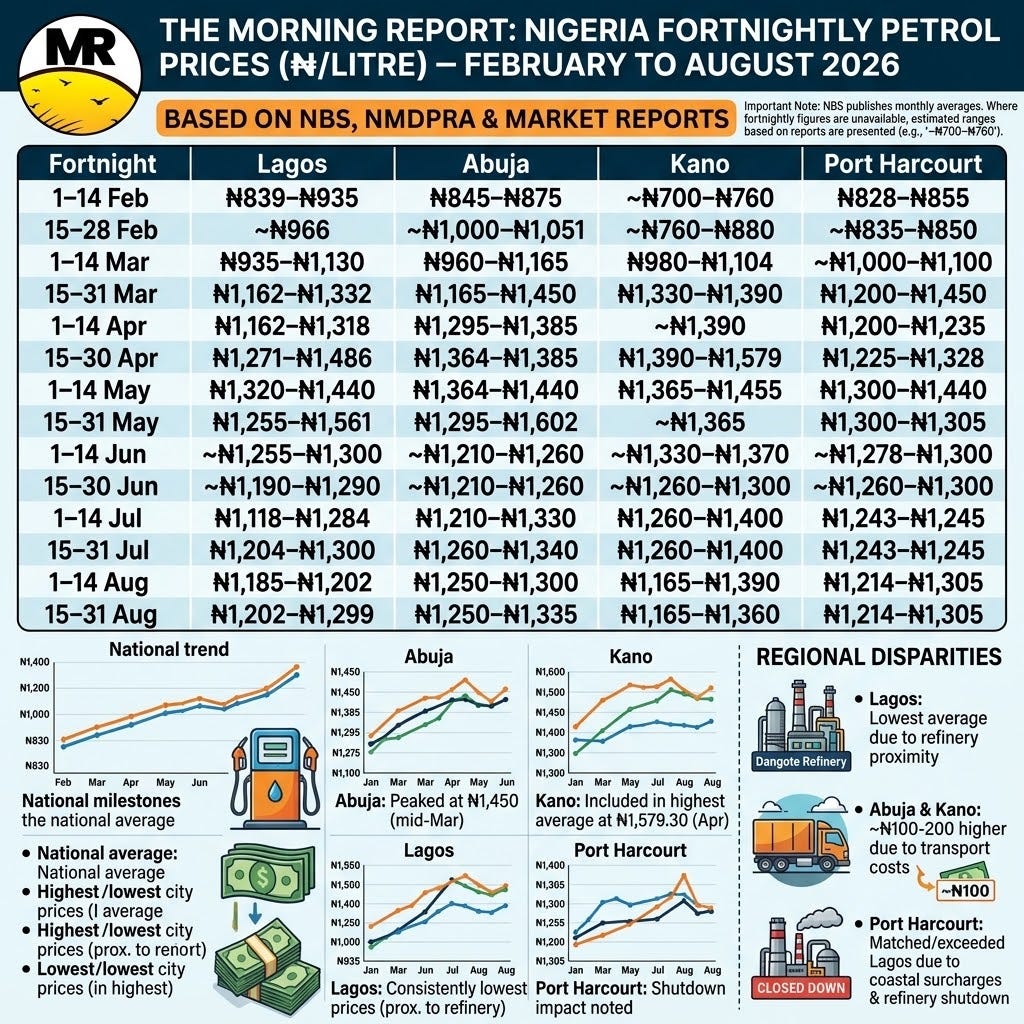
The petrol subsidy was removed in May 2023. Pump prices rose from about ₦185 to over ₦500 per litre. They climbed again through 2024 and 2025. Each increase tracked crude prices and the exchange rate. The Dangote refinery was meant to ease the pressure. It has not. Its pricing follows market logic. Crude costs are dollar-denominated. The naira remains weak. The pass-through to the pump is direct and immediate.
The latest increases followed Dangote Refinery’s fourth petrol price hike since August. Its gantry price rose to ₦1,350 per litre. The refinery prices on crude costs and exchange rates. When crude is above $100 per barrel, the gantry price rises. When the naira weakens, it rises again. Marketers add their margins and transport costs. The consumer pays the total.
The NLC’s proposals address symptoms. Wage awards increase nominal income without reducing fuel costs. Naira-denominated crude sales to local refineries could lower input costs, but only if the exchange rate is favourable and the crude is actually delivered. Petroleum reserves provide a buffer but do not change pricing. None of the three proposals touches the fundamental drivers: global crude prices and the exchange rate.
The government has ruled out a return to subsidy. The CPPE estimates the annual cost at about ₦19.16 trillion. That is not a viable fiscal option. The NLC knows this. Its proposals are a negotiating position, not a policy blueprint. The question is what it will accept as a concession. A wage award is the likely outcome. It will not lower petrol prices.
Winners: Dangote Refinery, which earns market-based margins. Fuel marketers, who pass costs through. The Federal Government, which avoids a new subsidy bill. Losers: Households, who face higher transport and food costs. Transport operators, whose margins shrink. Small businesses, which absorb fuel costs. The NLC, if its proposals are ignored. The poor, who spend the largest share of income on transport.
Bottom Line: Petrol at ₦1,500 is a market outcome, not a policy failure. The NLC can demand relief. The government can offer wage awards. Neither can control crude prices or the exchange rate. Those are the real drivers, and they are outside Abuja’s reach.