


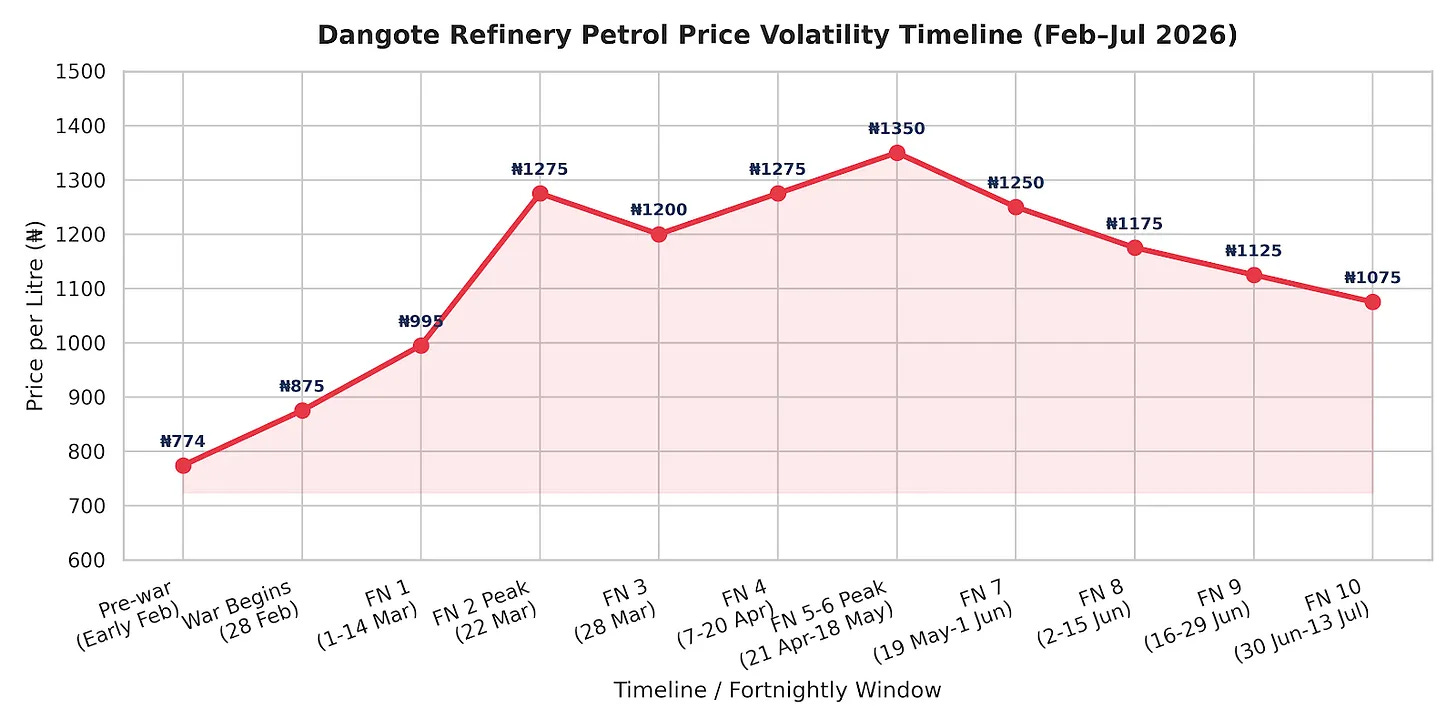
Nigerian petrol prices have surged to ₦1,230 per litre. The sharp price increase is attributed to the Dangote Refinery pricing its local market sales in US dollars, compounded by a recent spike in global crude oil prices stemming from international geopolitical tensions. Recent data indicates that Nigeria’s petrol imports surged by an alarming 207% last month. This heavy reliance on imported fuel comes as domestic supply volumes continue to weaken, increasing the financial strain on Nigeria’s foreign exchange reserves and local petroleum marketers.
The price increase follows the Dangote Refinery’s decision to end naira-denominated pricing for petrol and fix its ex-depot price at $0.779 per litre. At the prevailing official exchange rate of ₦1,380.50 to the US dollar, the new benchmark translates to approximately ₦1,075.61 per litre. The shift to dollar pricing means that the naira equivalent will now fluctuate with exchange rate movements, exposing consumers to currency risk.
The sharp increase in petrol imports, despite the Dangote Refinery’s operations, raises questions about the refinery’s capacity to meet domestic demand. The refinery has been operating below full capacity due to technical issues and supply constraints, forcing Nigeria to rely on imports to bridge the gap. The import surge adds to the pressure on Nigeria’s foreign exchange reserves, which are already under strain from debt servicing and other obligations.
This mirrors the 2023 fuel price hikes, when the removal of the fuel subsidy led to a sharp increase in petrol prices. The mechanism then was different, but the result was the same: Nigerian consumers paying more at the pump.
The winners: Dangote Refinery, which has reduced its exchange rate risk; and the Nigerian government, which earns more revenue from higher petrol prices. The losers: Nigerian consumers, who pay more for fuel, transport and food; and the Nigerian economy, which suffers from higher inflation.
Bottom Line: Petrol is now ₦1,230. The Dangote shift to dollar pricing is the cause. The consumer is paying the price. The government is watching. The question is whether there is a limit to what Nigerians can bear.