


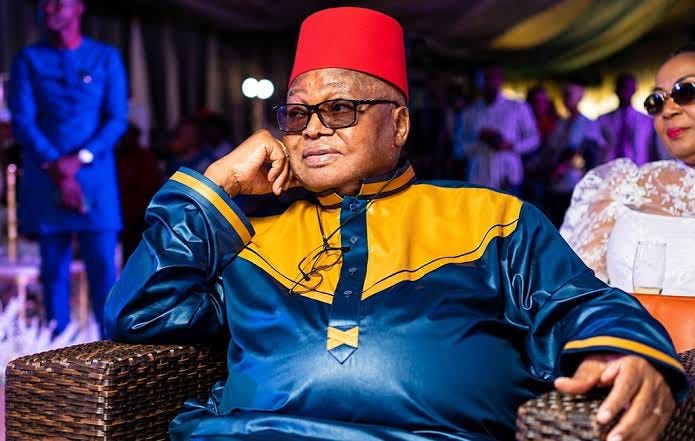
Patrick Dele Cole died in London on Saturday, 17 October 2026. He was 86. The family announced his death in a statement signed by his son, businessman and politician Tonye Cole.
Cole was born on 4 August 1940 in Abonnema, in the Kalabari Kingdom of present-day Rivers State. He turned 86 in August, barely two months before his death. He had been in declining health for weeks.
His career resisted easy categorisation. He was a historian by training, a newspaperman by trade, a diplomat by appointment and a politician by inclination. He served Nigeria in each of those roles, often simultaneously.
He was Managing Director of the Daily Times, then the country’s most influential newspaper. He was also one of those who made The Guardian, Nigeria, thick in the beginning. As managing director of the Daily Times, he upheld the vital role of the press in holding public officials accountable, speaking truth to power.
He served as Nigeria’s Ambassador to Brazil from 1990 to 1993, during the administration of General Ibrahim Babangida, and was also accredited to Argentina. He represented Nigeria at the United Nations and the Organisation of African Unity. He was later deputy national chairman of the Peoples Democratic Party for the South-South zone.
This mirrors the trajectory of the generation that built post-independence Nigerian public life. They moved between the academy, the newsroom, the foreign service and party politics without treating any of those spheres as a career. The assumption was that a trained mind could serve the state wherever it was needed. That assumption has largely collapsed. Nigerian public life now rewards specialists, factional loyalists and technical operators. The public intellectual who can move across domains is a vanishing type.
Former President Olusegun Obasanjo described Cole as one of Nigeria’s finest intellectuals. “His masterful stints as Nigeria’s Ambassador to Brazil and Argentina further cemented his legacy as a titan of public service who proved that integrity and public duty can coexist beautifully,” Obasanjo said.
Rivers State Governor Siminalayi Fubara said Cole devoted his entire life to the service of the nation and served with uncommon patriotism and dignity. The Pan Niger Delta Forum declared seven days of mourning, describing his legacy as spanning journalism, education, diplomacy, public administration and politics.
The human stakes are about memory. Cole belonged to a class of Nigerians who believed the country’s institutions mattered enough to build, critique and defend. He edited the newspaper that held governments to account. He represented the country abroad. He organised politically at home. That combination is not easily replaced.
Winners and Losers
Winners: The Cole family, which receives national recognition of a life well lived. The Kalabari Kingdom and Rivers State, which claim a statesman of national standing. The generation of journalists and diplomats he mentored, who inherit his standards.
Losers: The Nigerian public, which loses a public intellectual who could speak across the divides of journalism, diplomacy and politics. The Daily Times, which loses a living link to its era of influence. The PDP South-South, which loses an elder with institutional memory.
Bottom Line: Patrick Dele Cole served Nigeria in four professions and left each one stronger. The country mourns him. It also mourns the type of public servant he represented.