


Nigeria spent ₦91.62 billion importing crude palm oil between January and June 2026. That is a 486.94% increase from the ₦15.61 billion recorded in the same period of 2025, according to National Bureau of Statistics (NBS) foreign trade data. Domestic production stands at roughly 1.5 million metric tonnes a year, making Nigeria Africa’s largest producer and the fifth largest globally. Annual consumption is estimated at between 2.2 million and 2.6 million metric tonnes, leaving a structural deficit of at least 700,000 tonnes. Exports fell 53% to ₦3.64 billion in the second quarter of 2026, down from ₦7.74 billion a year earlier.
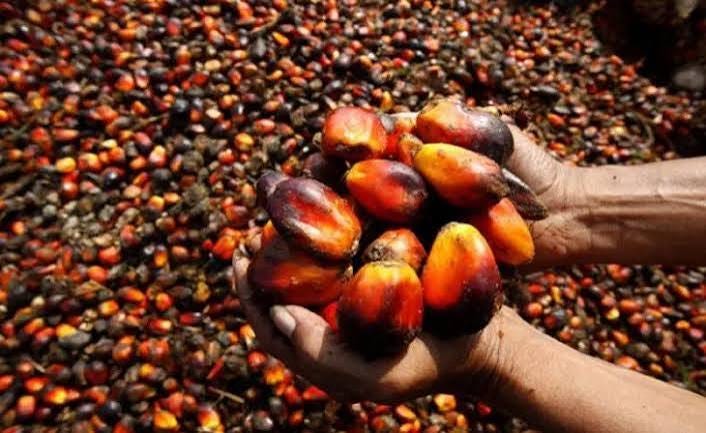
The mechanics of the deficit are not complicated. Nigeria’s plantations are ageing, and replanting has lagged for decades. Smallholders, who supply most of the fruit, lack the capital to rehabilitate trees or invest in processing. The millers who buy from them operate on thin margins and cannot compete with importers who bring in refined oil at scale. Tunde Banjoko, chairman of the Lagos Chamber of Commerce and Industry’s Agricultural and Allied Group, puts the gap plainly: “We still have a major deficit of almost 1.5 million tonnes. We are unable to meet our domestic and industrial demand. Importation is not the solution”.
This echoes the 1970s palm oil boom, when Nigeria was the world’s largest producer and then let its plantations decay as attention shifted to crude oil. Malaysia and Indonesia took the market Nigeria abandoned. The current import surge is the bill for that neglect.
The winners are the importers, who meet demand at a price local producers cannot match, and listed producers like Presco and Okomu, whose Nigerian revenue is rising even as group earnings stall. Presco’s domestic revenue grew 12.7% to ₦222.02 billion in the first nine months of 2026, while its Ghana operations fell sharply. The losers are the smallholders who cannot sell into a market that prefers imported oil, and the consumers who pay more for a product Nigeria could produce at scale.
Bottom Line: A 487% import surge is a demand signal. Nigeria’s plantations are not answering it.