


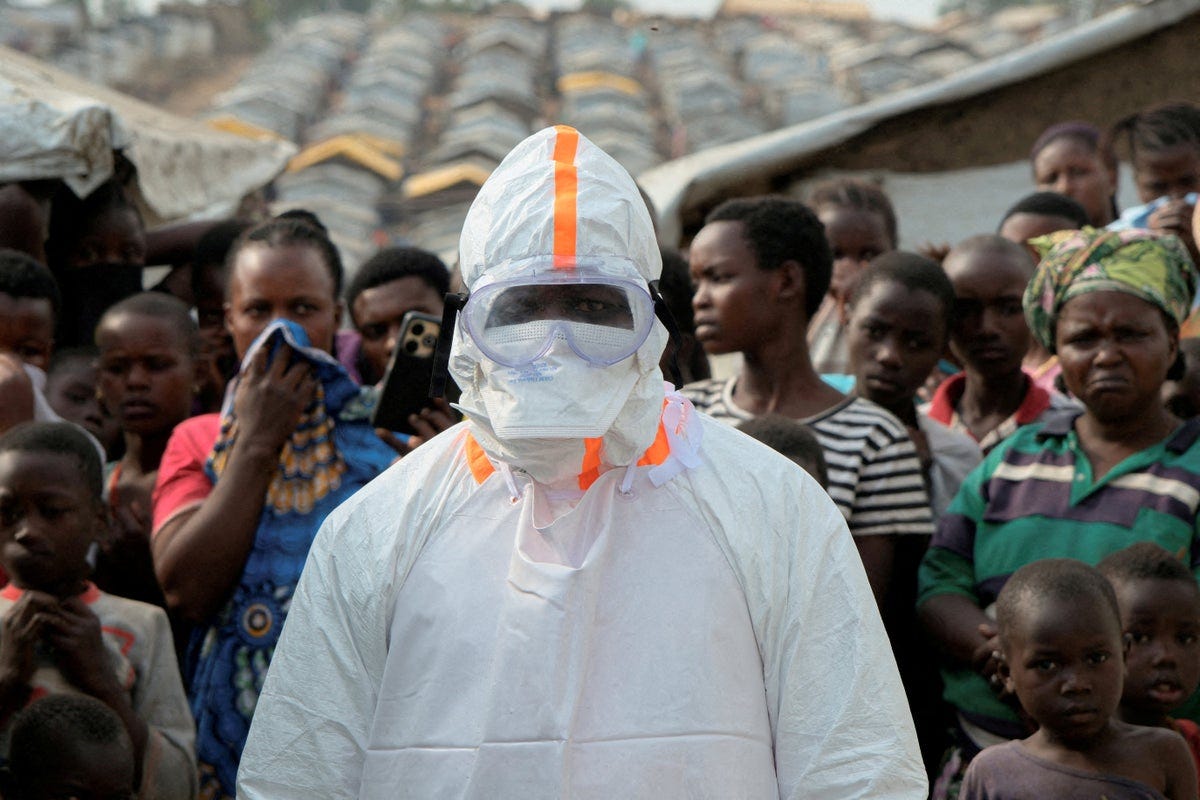
The University of Oxford has launched the first human clinical trial of a vaccine against Bundibugyo ebolavirus, marking a significant step in efforts to contain an outbreak affecting the Democratic Republic of Congo and Uganda. The early-stage trial, known as BD-Ebov, will assess the safety and immune response of the ChAdOx1 BDBV vaccine in 50 healthy adults aged 18 to 55 in Oxford. Recruitment is already underway, with vaccinations expected to begin in the coming weeks, pending regulatory approval.
The vaccine was developed using the same viral vector platform as the Oxford/AstraZeneca COVID-19 vaccine. India’s Serum Institute has produced about 620,000 doses and supplied 4,000 doses for the trial. The World Health Organisation has prioritised the vaccine for clinical evaluation, while the Coalition for Epidemic Preparedness Innovations has committed up to $8.6 million to support its development. Additional trials are planned in Uganda before larger studies and potential regulatory approval.
The Nigerian stake is urgent. Nigeria’s public health surveillance systems are weak. The country’s borders are porous. The 2014 Ebola outbreak showed how quickly a virus can spread across West Africa. If the Bundibugyo virus reaches Nigeria, the consequences could be severe. The vaccine trial is welcome news, but it will be months before it is ready for widespread use.
From a Nigerian vantage point, the trial is a reminder that Nigeria is not immune to regional outbreaks. The lesson of 2014 was clear. Yet the country’s health surveillance systems remain underfunded. The faster the virus spreads in DRC and Uganda, the higher the risk that it will reach Nigeria’s borders.
This echoes the 2014 Ebola epidemic, when the virus spread from Guinea to Liberia, Sierra Leone and Nigeria. The outbreak claimed over 11,000 lives across West Africa before it was contained. Nigeria recorded 20 confirmed cases and eight deaths. The lesson was clear. The question is whether Nigeria has learned it.
The winners: the trial participants, who contribute to science; the global health community, which gains a new tool; and the people of DRC and Uganda, who may eventually benefit from the vaccine. The losers: the 1,759 confirmed cases and 600 families who lost loved ones, and Nigeria, which has not yet learned the lessons of 2014.
Bottom Line: Oxford is testing a new Ebola vaccine. The outbreak in the DRC is spreading. Nigeria is watching. The clock is ticking.