


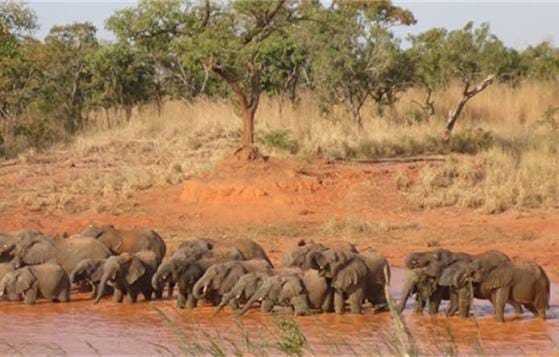
Nigeria has only about 400 elephants left in the wild, with conservationists warning that habitat loss, illegal ivory trade and human-wildlife conflict are threatening the survival of the species. The conservationists disclosed this at a media engagement organised by Wild Africa and the Nigerian Conservation Foundation (NCF) ahead of World Elephant Day, celebrated annually on Aug. 12.
Dr Mark Ofua, wildlife veterinarian and West African representative of Wild Africa, said the remaining population comprised about 300 forest elephants and 100 savannah elephants. Ofua described the population as a critical mass, warning that continued habitat fragmentation and hunting could result in inbreeding and eventually push the species into extinction. “Elephants are tenders of the forest,” he said, explaining that the animals played important roles in maintaining forest health, biodiversity and ecological balance.
Dr Stella Egbe, who leads biodiversity pillar programmes at NCF, said forest elephants were found in areas including Omo Forest Reserve, Cross River National Park and coastal areas of Rivers State. Savanna elephants were mainly found in Yankari Game Reserve, Bauchi State. She noted that elephant populations could move across state and national boundaries.
The dwindling elephant population is a tragedy for Nigeria’s biodiversity. Elephants are an umbrella species; their disappearance would signal that the forest ecosystem is unhealthy and collapsing. The causes of the decline are well-known: habitat loss, illegal ivory trade and human-wildlife conflict. The solutions are also known: stronger enforcement, public education and habitat protection. The question is whether there is the political will to act.
This echoes the 2010s warnings about elephant extinction in Africa, which have seen several countries take action. The mechanism then was different, but the result was the same: a growing recognition of the need for conservation.
The winners: the conservation organisations working to protect elephants; and the Nigerian environment, which benefits from biodiversity. The losers: the elephants, which face extinction; and the Nigerian government, which must act to protect them.
Bottom Line: Nigeria has only 400 elephants left. The species is on the brink. The question is whether the government will act before it is too late.