


A fire outbreak at Sunbeth Filling Station in Awoyaya, Ibeju-Lekki, Lagos State, has reportedly claimed one life and damaged properties, renewing concerns about safety at petroleum and gas facilities located close to residential communities.
The incident occurred at about 4:50 pm on Friday, November 20, near Awoyaya Bus Stop along the Lekki-Epe Expressway.
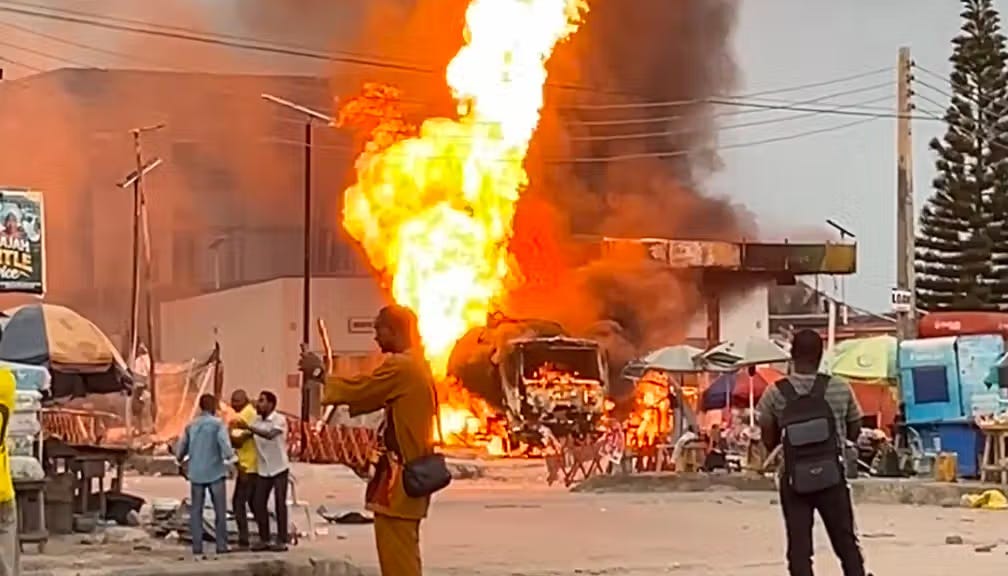
Preliminary accounts indicate that the explosion happened while a tanker was discharging gas at the facility. The blast triggered a fire that engulfed parts of the filling station, sending thick smoke into the surrounding neighbourhood.
Residents and motorists reportedly fled as flames spread across the facility. Witnesses described hearing a loud explosion before smoke covered parts of the area.
A tanker was seen badly burnt near the station’s diesel pumps, while debris and damaged structures were reported around the facility. A nearby wooden kiosk was also affected.
The incident caused significant disruption along the Lekki-Epe Expressway as motorists struggled to move through the area and emergency responders worked to contain the fire.
Sunbeth Energies, the operator of the filling station, acknowledged the incident in a statement, saying its team was working with emergency response agencies and relevant authorities to manage the situation.
The company said the safety of its customers, employees, neighbouring communities and the public remained its priority. It also pledged to cooperate with the authorities as they investigate the circumstances surrounding the fire.
However, the exact cause of the explosion and the full extent of the damage remain subject to official investigation. Reports about the casualty figure have also varied, with some accounts indicating that several people may have died.
The incident raises fresh questions about safety procedures during the transfer of gas and other petroleum products at filling stations.
Tanker offloading is a particularly sensitive operation because it involves transferring highly flammable products into storage facilities. Poor handling, equipment failure or inadequate safety precautions can turn routine operations into major emergencies.
The risks become greater when filling stations operate close to homes, shops and busy roads. An explosion in such locations can expose residents, workers, customers and passers-by to serious danger.
Lagos has experienced similar incidents. In August 2024, a fire at a Mobil filling station along Obafemi Awolowo Road in Ikeja injured 11 people, destroyed nine vehicles and affected an adjoining two-storey building.
Following that incident, emergency officials advised filling station operators to suspend fuel sales whenever gas was being discharged.
The latest incident also comes days after a separate fire at an NNPC-affiliated filling station along Ekoro-Ajasa Road in Alimosho. That fire spread to a neighbouring school, destroying seven classrooms, three fuel pumps, a truck and a Toyota Camry. No casualties were recorded in that incident.
The immediate losers are the family of the reported victim, affected property owners, businesses and residents who faced the danger and disruption. Sunbeth Energies also faces scrutiny over the circumstances surrounding the incident, while emergency and regulatory agencies must establish whether safety procedures were followed.
Beyond containing the fire, authorities must determine whether the facility complied with the required standards for gas handling, tanker discharge and separation from neighbouring properties.
Bottom Line: Another filling station fire has exposed the dangers surrounding petroleum operations in densely populated Lagos communities. Investigations must establish what went wrong, but enforcement must go beyond issuing safety warnings after lives and properties have been lost.