


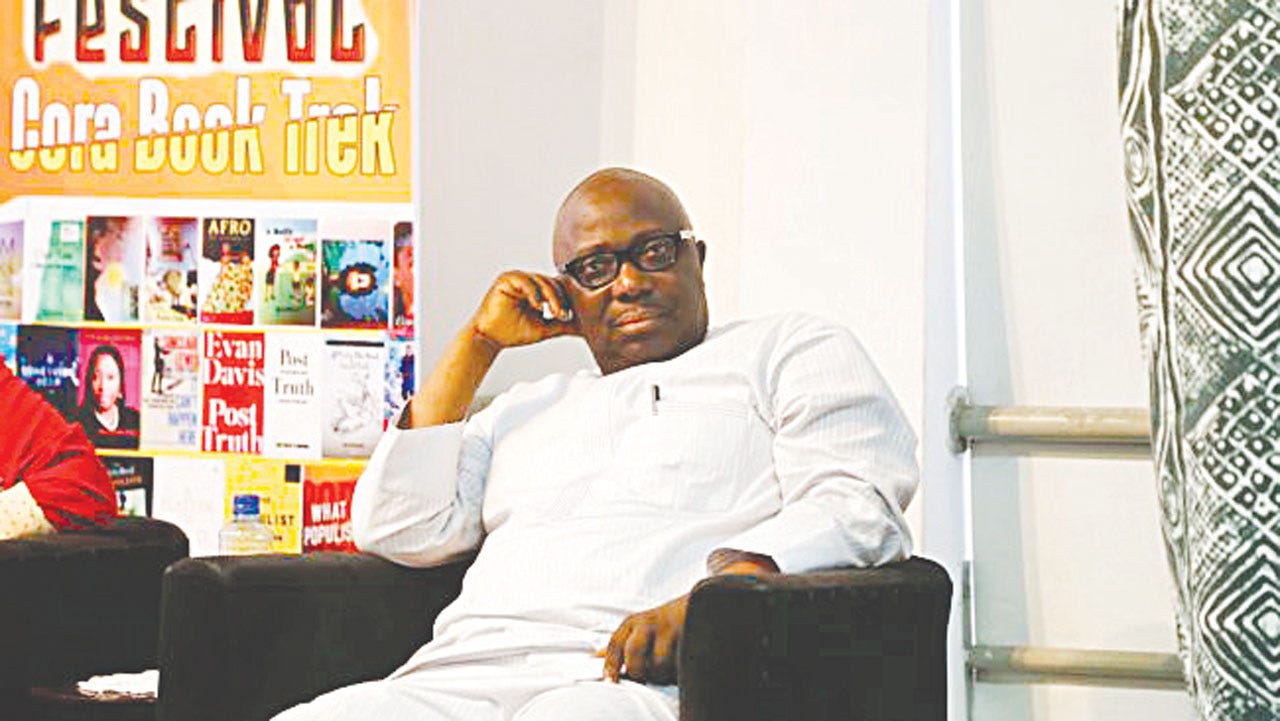
Nigeria’s democracy needs a new professional ethic for reporting religion, according to Dapo Olorunyomi, a media executive and publisher of Premium Times. Delivering a keynote address during a breakfast dialogue with media on religion and freedom of religion media reports in Nigeria, held at the Konrad Adenauer Stiftung office in Abuja, Olorunyomi described the approach as “Faith Journalism”.
“Faith Journalism is not journalism that advocates for a religion, defends religious institutions from scrutiny, or turns reporters into evangelists,” Olorunyomi said. “It is the disciplined, independent, constitutionally grounded practice of reporting religion with the rigour, literacy, and moral seriousness the subject demands—distinguishing faith from those who speak falsely in its name, holding religious power accountable exactly as we hold political and economic power accountable, and treating every citizen, of every conviction or none, as constitutionally equal”.
Olorunyomi argued that Nigeria is “perhaps one of the few countries in the world where religion is not merely practised, it is performed, narrated, debated, contested, celebrated, commercialised, and increasingly mediated.” Faith no longer resides only in churches, mosques, temples, or sacred groves, he said. “It circulates through dawn radio broadcasts, livestreamed sermons, WhatsApp devotionals, YouTube channels, and TikTok clips”.
He grounded his argument in the Constitution, citing Section 38, which guarantees freedom of thought, conscience, and religion as an inherent right, not a privilege extended by the majority. “Constitutional rights do not fluctuate with numbers or popularity. A democracy is not measured by how securely the majority worships; majorities rarely fear for their freedoms. It is measured by how confidently minorities and dissenters live without intimidation”.
Olorunyomi acknowledged Nigeria’s complex religious history, from the Sokoto Caliphate to the colonial era, when some of Nigeria’s earliest newspapers emerged from missionary initiatives. “Print culture and religious communication were intertwined from the start,” he said. Today, the smartphone has become perhaps the most influential religious platform in the country: “every citizen now carries a printing press, a broadcasting station, and a publishing house in the palm of the hand”.
He warned that this democratisation has also created fertile ground for “fabricated miracles, manipulated videos, and sectarian rumour.” The solution, he argued, is not to avoid religion but to report it responsibly.
In his welcome address, Moritz Sprenker of Konrad Adenauer Stiftung said the dialogue was important because “religion in Nigeria is not an abstract concept. It shapes identity, community, public debate, and politics.” He added that freedom of religion is “not just a legal principle—it is a lived reality, shaped every day by how we speak about one another, and crucially, by how the media reports”.
Sprenker warned that “a headline can clarify or inflame. A report can shed light on complexity—or reduce it to a harmful binary.” He urged journalists to remember that “the task is not silence, but responsible reporting”.
Olorunyomi concluded with a call to action: “If our journalism is truthful, our democracy will be wiser. If our religion is compassionate, our citizenship will be stronger. And if we hold to Faith Journalism as our shared discipline, Nigeria’s diversity will become not a burden to be managed, but a gift its Republic is continually renewed by”.
The call for Faith Journalism comes at a time when Nigeria’s religious divides are increasingly exploited by politicians and social media influencers. The 2023 elections were marked by religious rhetoric, and the 2027 elections are likely to be worse. A new professional ethic for reporting religion is not just a journalistic issue. It is a democratic imperative.
This echoes the 1990s debates about ethnic and religious balancing in Nigerian politics, which also raised questions about how the media should report on sensitive issues. The mechanism then was different, but the result was the same: a recognition that the media has a responsibility to heal divides, not deepen them.
The winners: Nigerian journalism, which gains a new professional standard; Nigerian citizens, who benefit from more responsible reporting; and Nigerian democracy, which is strengthened by better understanding. The losers: those who profit from religious division, and the Nigerian public, which continues to be exposed to polarising coverage.
Bottom Line: Nigeria needs a new way of reporting religion, according to Dapo Olorunyomi. He calls it Faith Journalism. The question is whether Nigerian newsrooms will embrace it or ignore it.