


Global oil prices surged towards $80 per barrel on Wednesday after United States President Donald Trump declared the ceasefire agreement with Iran over, reigniting fears of supply disruptions through the Strait of Hormuz. International benchmark Brent crude rose about 6 percent to $78.58 per barrel, while United States benchmark West Texas Intermediate (WTI) climbed to $74.76 per barrel as traders priced in the risk of a broader regional conflict.
The rally followed fresh military clashes between Washington and Tehran overnight, with the United States striking Iranian targets and Iran retaliating against American military interests in the Gulf. The renewed hostilities raised fears that diplomatic efforts to end the conflict and restore stability in the Strait of Hormuz, a strategic chokepoint through which about one-fifth of global oil and liquefied natural gas supplies pass, had failed.
Despite the escalation, oil tankers continued to transit the strait on Wednesday, though shipping traffic remained well below normal levels as operators reassessed security risks in the region. According to tanker tracking data, six vessels were observed entering or leaving the strait hours after Iran attacked three commercial ships off the coast of Oman on Tuesday. One of the vessels that successfully completed the passage was a very large crude carrier chartered by ExxonMobil carrying about two million barrels of crude oil. However, several other vessels adopted a more cautious approach, either turning back or anchoring on either side of the strait, waiting for further instructions on maritime safety and the direction of the conflict.
The latest developments have presented ship owners with difficult choices. The northern shipping channel, located closer to Iranian territorial waters, is widely believed to require tacit approval from Iranian authorities, while the southern corridor along the Omani coastline is generally considered to be under the protection of United States naval forces. Ironically, it was along the southern route near Oman that Iran reportedly struck three commercial vessels on Tuesday. Two of the vessels targeted were carrying energy cargoes, including a Qatari liquefied natural gas carrier and a Saudi-owned ultra-large crude carrier.
Following the incidents, the Joint Maritime Information Centre raised the security threat level for the Strait of Hormuz to “severe”, warning that deliberate hostile actions were now considered likely under prevailing conditions. The United Kingdom Maritime Trade Operations also issued an advisory urging vessels operating in the region to exercise extreme caution. “Iranian attacks have raised the threat level to severe, with deliberate hostile action likely under current conditions,” UKMTO said.
According to Andreas Krieg, a security expert at King’s College London, Iran remains committed to its position that vessels using the strait should be subject to transit fees, a proposal strongly opposed by Washington. “We are now in a sensitive period where potential alternatives to an Iranian toll or fee system are being explored,” Krieg said. Market analysts said investors are closely monitoring developments in the strait, where any prolonged disruption to shipping could significantly tighten global crude supplies and push oil prices closer to the $80-per-barrel mark and beyond.
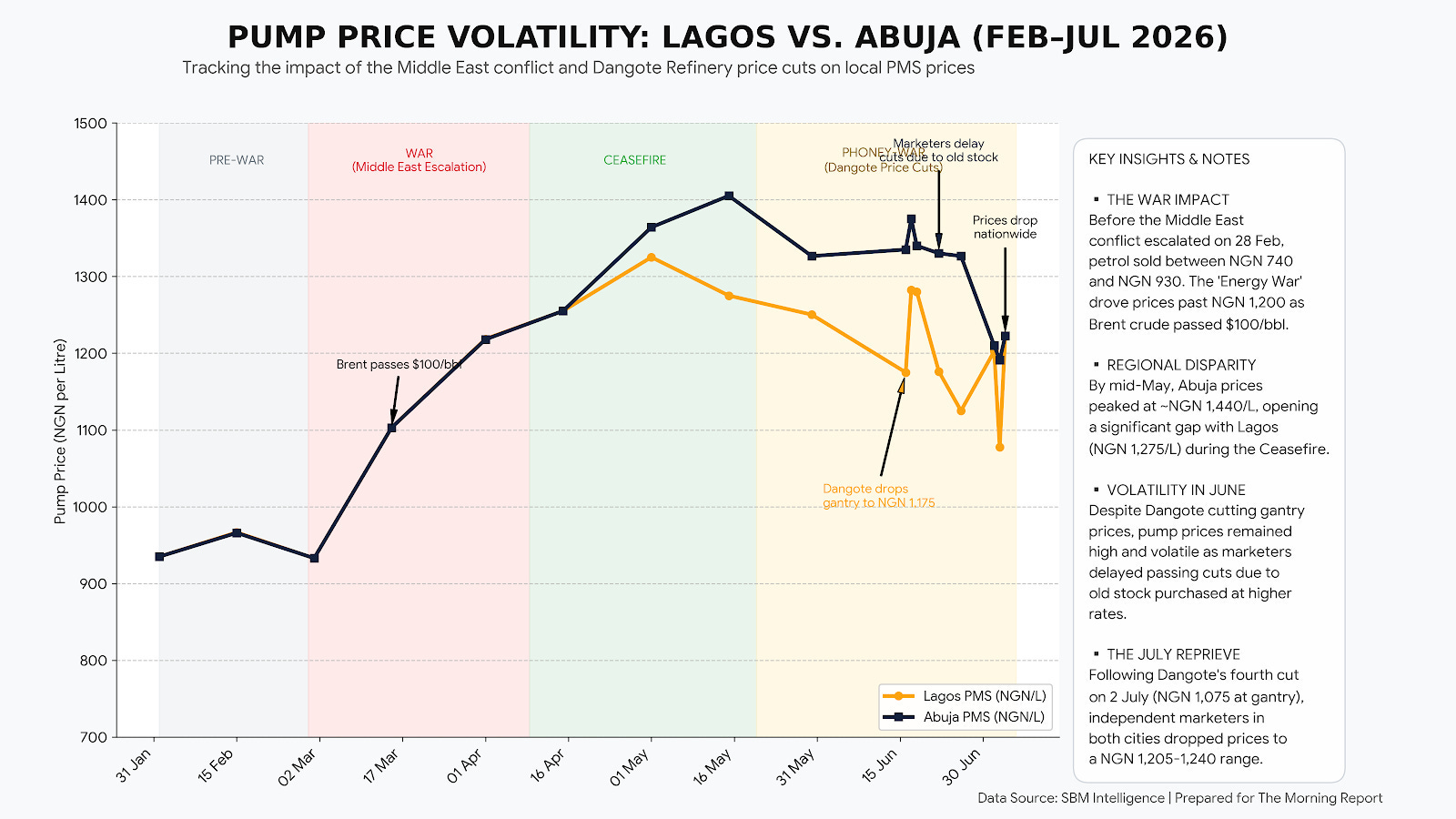
The Nigerian stake is direct. Nigeria is an oil-exporting country that benefits from higher prices, but it is also an importing country that suffers when fuel costs rise. Higher oil prices will boost government revenue but also increase the cost of petrol imports, which Nigeria still relies on despite the Dangote refinery’s operations. From a Nigerian vantage point, the Iran crisis is a double-edged sword. Higher oil prices mean more revenue for the government but also higher fuel prices for consumers, which will feed into inflation and erode the purchasing power of Nigerian households.
This mirrors the 2019 Strait of Hormuz crisis, when attacks on tankers pushed oil prices higher and heightened global tensions. The mechanism then was different, but the result was the same: oil markets spiked, and Nigeria found itself caught between higher revenue and higher costs.
The winners: oil-exporting countries, including Nigeria, which will earn more from crude sales. The losers: oil-importing countries and Nigerian consumers who will pay more for petrol and other petroleum products.
Bottom Line: Oil is heading towards $80. That is good for Nigeria’s revenue. It is bad for Nigeria’s inflation. The government will collect more. Nigerians will pay more. That is the paradox of oil dependence.