


Supporters of Peter Obi and the Nigeria Democratic Congress rejected the new national anthem at a Lagos town hall on Thursday. The event was billed to start in the morning. It did not begin until 6pm because political thugs invaded the venue. Preparations were ongoing when the thugs broke in and attacked anyone in sight. NDC supporters fought back and forced them to retreat.
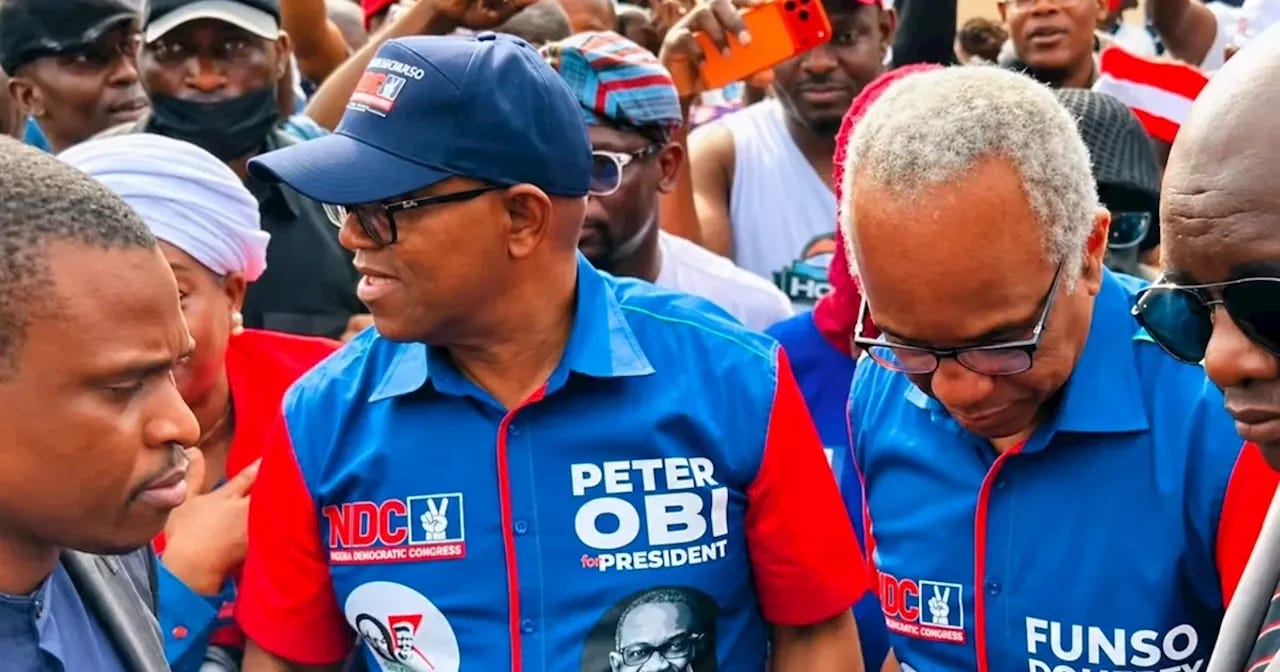
When the event finally started, supporters recited “Arise O Compatriots”, the old anthem. The anchor switched to the old anthem, and attendees recited it while Obi cheered them on. The choice was a direct rejection of the anthem that President Bola Tinubu signed into law on 29 May 2024. The venue hours before Obi’s arrival showed destroyed vehicles, broken bottles and sprayed bullets.
An ADC ward chairman in Ifako Ijaiye, Olamilekan Olayiwola, sustained an injury to his hand. He said he saw five yellow commercial buses parked outside before the attack. He said about 50 men arrived with guns hidden in sacks, cutlasses and axes. Police intervened and fired into the air. He called for security at every polling unit, not just at the venue. “We need enough security to defend our votes,” he said.
This mirrors the 2019 and 2023 election cycles, when opposition rallies were attacked and supporters were intimidated. It also echoes the 2024 anthem change, which was pushed through the National Assembly without a referendum or broad consultation. The anthem is now a political symbol. Reciting the old one is a quiet protest. Fighting back against thugs is a louder one.
The winners are the NDC, which turned a disrupted event into a statement; Obi, who gained a viral moment; and supporters, who showed organisational capacity. The losers are the APC, which was blamed for the attack; the police, who failed to prevent it; the injured ward chairman; and the new anthem, which is now associated with a contested political order.
Winners: NDC; Peter Obi; supporters who defended the venue.
Losers: APC, which faces blame; the police, who failed to prevent the attack; Olamilekan Olayiwola.
Bottom Line: An anthem is supposed to unite. When one party’s supporters refuse to sing it, the problem is not the song but the politics behind it.