


Peter Obi has placed healthcare and education at the centre of his 2027 presidential campaign, promising to build 10,000 primary healthcare centres and 40,000 primary school blocks across Nigeria if elected.
The presidential candidate of the Nigeria Democratic Congress (NDC) made the promises on Friday, November 20, during a town hall meeting and homecoming event at All Saints Cathedral in Onitsha, Anambra State.
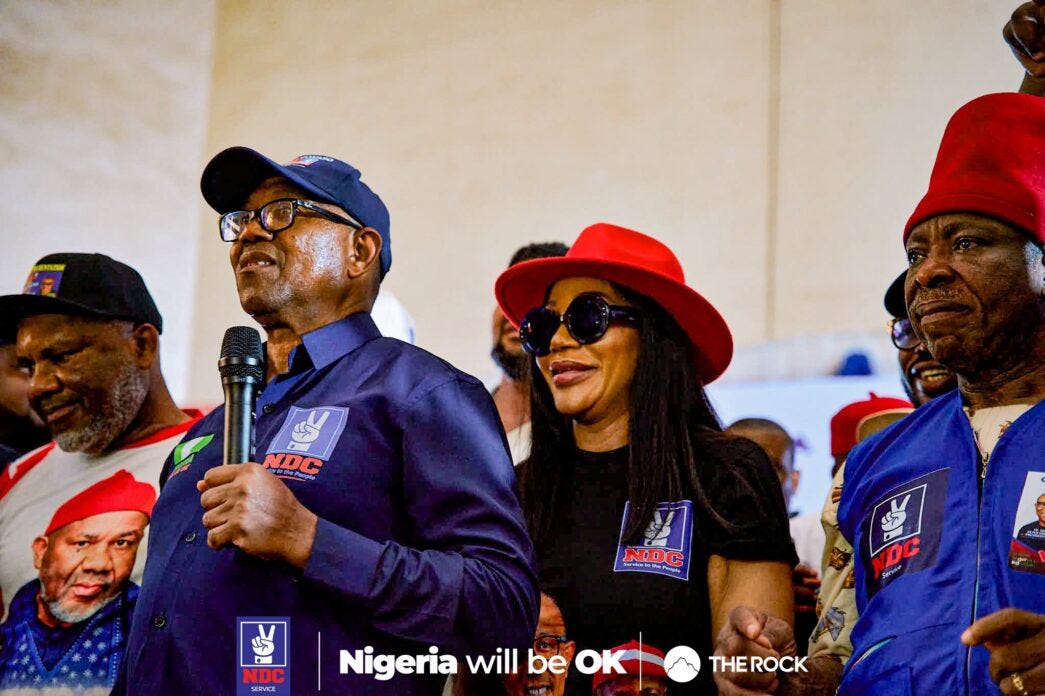
Standing before supporters alongside his running mate, Rabiu Musa Kwankwaso, the former Anambra State governor said his administration would ensure that every ward in the country had access to a functional primary healthcare centre.
Nigeria has 8,809 wards, but Obi said his proposed government would construct 10,000 facilities, exceeding the number of wards to expand access to basic medical services.
The promise comes against the background of persistent weaknesses in Nigeria’s primary healthcare system. Many communities still struggle with inadequate facilities, medical personnel, essential drugs and reliable funding.
For residents in rural communities, a functional primary healthcare centre can mean the difference between receiving timely treatment close to home and travelling long distances to access medical attention.
Obi also turned his attention to education, citing the estimated 18 million out-of-school children in Nigeria.
He promised to construct 40,000 primary school blocks, saying the intervention would begin from the first day of his administration.
“We have 18 million out-of-school children, and from day one, people will see the reduction because we plan to do 40,000 primary school blocks,” he said.
The proposal targets one of Nigeria’s most persistent development challenges. Millions of children remain outside the formal education system, while many existing public schools struggle with overcrowded classrooms and inadequate infrastructure.
However, constructing classrooms alone will not resolve the crisis. Teachers, instructional materials, security, school feeding and sustained funding will determine whether additional buildings translate into better access to education.
The same challenge applies to healthcare. Building 10,000 centres will matter only if the facilities have qualified personnel, essential medicines, equipment and dependable funding.
Obi presented the proposals as part of a broader plan to move Nigeria from a consumption-driven economy to one based on production and job creation.
He also promised to tackle corruption, strengthen national security and ensure that public resources serve the interests of citizens.
His running mate, Kwankwaso, is expected to share responsibility for delivering the proposed agenda if the ticket wins the 2027 election.
The two candidates have also promised to generate, transmit and distribute at least 10,000 megawatts of electricity during their proposed administration.
For Obi, the pledges offer voters measurable targets against which they can assess his administration. The beneficiaries would be underserved communities, children without access to schools and families struggling to obtain basic medical care. But taxpayers would ultimately bear the cost of delivering the projects, while the government would face the challenge of balancing construction with recurrent expenditure and maintenance.
The promises also raise questions about implementation. How much would the projects cost? Where would the money come from? How would the administration ensure that the facilities remain functional after construction?
Those questions will become increasingly important as the election approaches. Voters need more than impressive numbers. They need a credible financing plan, clear timelines and a system for measuring progress.
Bottom Line: Obi has put 50,000 proposed healthcare and education projects on the table. But Nigeria has seen enough abandoned projects to know that the real test is not how many buildings a candidate promises to construct, but how many functional facilities citizens eventually get.