


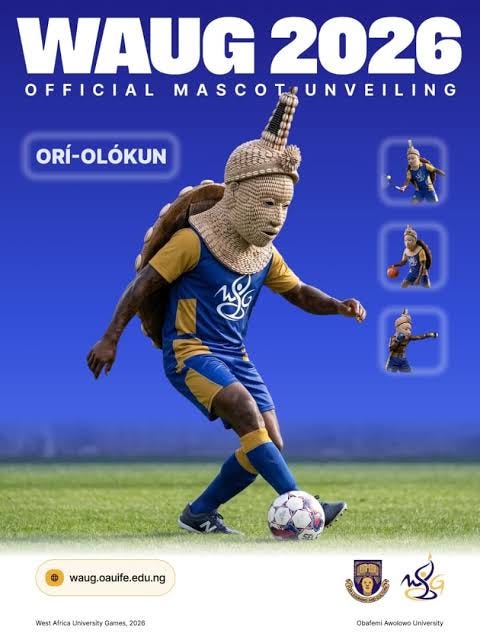
The 16th edition of the West African University Games begins today, Friday, 2 October 2026, at Obafemi Awolowo University, Ile-Ife. Student-athletes from universities across West Africa will compete in football, basketball, boxing, swimming, table tennis, badminton and other sports. The Games will run until 12 October.
The host university is not unfamiliar with the event. OAU previously hosted the 6th edition in 1975, as well as the most recent edition which held in 2023. The university also hosted the Nigerian University Games in 2014. Preparations have been ongoing, with improvements to sporting facilities, transportation arrangements and medical services. Organisers unveiled the official logo and mascot in August, drawing inspiration from the cultural heritage of Ile-Ife. The mascot was designed by an OAU student, while the logo was designed by a student from Lagos State University.
This mirrors the broader challenge of university sports infrastructure in Nigeria and the sub-region. The West African University Games provide a platform for student-athletes to showcase their talents and engage in cultural exchange. However, the gap between these periodic competitions and sustained investment in university sports remains wide. For context, this is only the third edition of the tournament to be held in the past 8 years. Nigerian universities produce talented athletes, but few have the facilities or funding to develop them consistently.
The event’s significance extends beyond sport. It is a rare example of regional integration in practice, bringing together students from across West Africa for ten days of competition and cultural exchange. The organisers’ decision to place students at the centre of the event’s branding, through the logo and mascot competitions, signals a commitment to youth ownership.
The human stakes are about opportunity. For student-athletes from smaller universities with limited facilities, the Games offer exposure they cannot get at home. A strong performance can attract attention from professional clubs or national selectors. For the host university, the event is a logistical test and a reputational opportunity.
Winners and Losers
Winners: OAU, which gains visibility and demonstrates organisational capacity. Student-athletes, who gain a platform to compete and showcase talent. West African universities, which benefit from regional sporting cooperation.
Losers: Universities that cannot afford to send delegations, which miss the opportunity. Nigerian university sports, which lack sustained investment between biennial events.
Bottom Line: A regional university games is a statement. It says that West African students can compete, collaborate and build relationships across borders. The test is whether the infrastructure exists to support them after the Games end.