


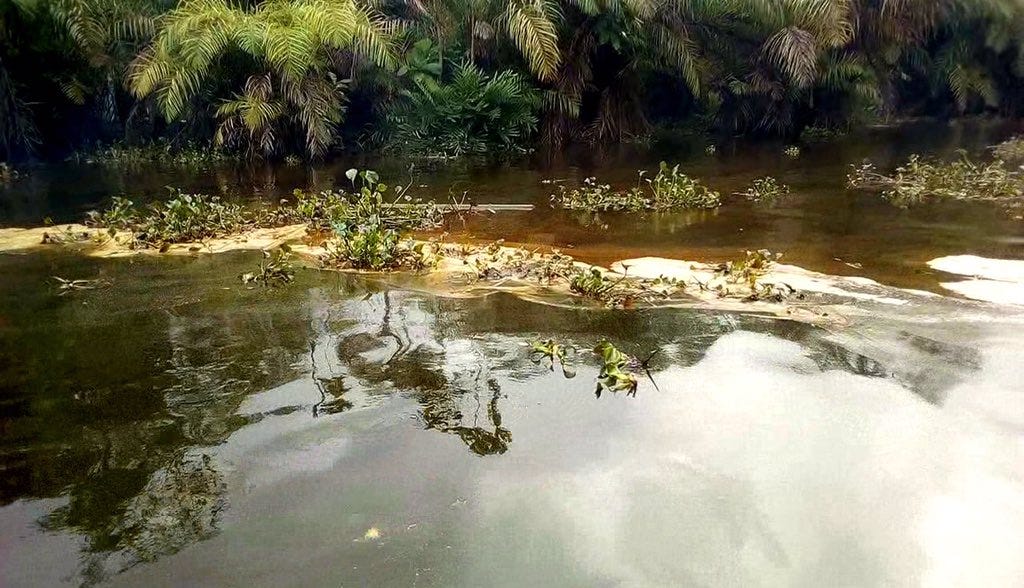
Oando Plc has attributed the 27 June oil spill from its Azuzuama-1 flowline in Southern Ijaw Local Government Area of Bayelsa State to suspected third-party sabotage. In a statement, the company’s General Manager of Corporate Communications, Alero Balogun, said the spill occurred along the four-inch flowline at the Azuzuama community.
Oando immediately activated its emergency response team to contain the spill in line with established protocols and regulatory requirements. The company worked with the National Oil Spill Detection and Response Agency (NOSDRA), the Bayelsa State Ministry of Environment and representatives of the host community to facilitate the statutory Joint Investigation Visit, containment, repair and remediation efforts.
An Ultrasonic Thickness Measurement test conducted on the affected section of the flowline indicated evidence consistent with induced corrosion caused by third-party interference, commonly described as sabotage. The finding was affirmed by regulatory authorities that participated in the investigation. Repairs to the damaged section were completed on 19 July after stakeholders restored access to the site. Environmental cleanup and remediation activities are ongoing in line with applicable environmental standards.
The incident is the latest in a long pattern of oil spills in the Niger Delta, where pipeline sabotage and crude theft have become endemic. The region has suffered decades of environmental degradation, with oil spills destroying farmlands, polluting water sources and devastating fishing communities. While Oando’s swift response is commendable, the underlying problem of pipeline vandalism remains unresolved.
This echoes the 2011 Bonga oil spill, which also highlighted the vulnerability of Nigeria’s oil infrastructure to sabotage. The mechanism then was different, but the result was the same: communities left to bear the cost of environmental degradation.
The winners: Oando, which has contained the spill and repaired the pipeline; and the regulatory agencies, which have overseen the response. The losers: the Azuzuama community, which bears the environmental cost; and the Nigerian environment, which continues to suffer from oil spills.
Bottom Line: Oando says sabotage caused the Bayelsa oil spill. The cleanup is ongoing. The damage is done. The question is whether the perpetrators will be caught or the case will join the long list of unresolved sabotage incidents.