


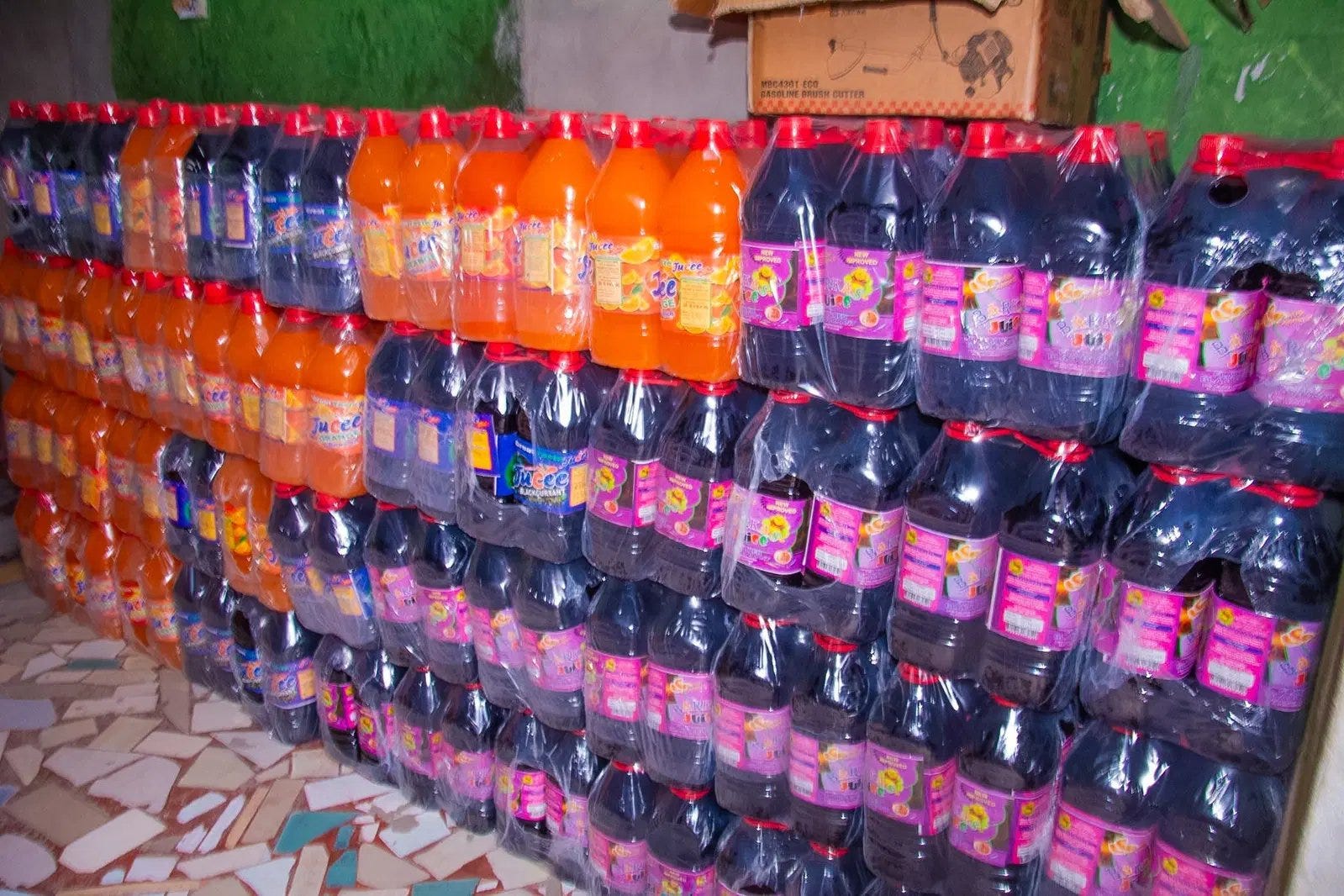
The Nigeria Security and Civil Defence Corps (NSCDC) raided a facility in Badagry, Lagos, on 21 September 2026. Officers seized cartons of unregistered Barkas Juice, industrial sugar, dyes, untreated water and production equipment. They arrested two women aged 48 and 50. The women claimed it was a family business started by their grandmother. Officers also rescued two juveniles aged 15 and 16. The product is suspected to use fake NAFDAC numbers. It was destined for markets in Lagos and Benin City. The raid has heightened concerns over beverage safety.
Nigeria has a long history of counterfeit food and drink. In 2019, NAFDAC seized fake beverages worth millions in Lagos and Onitsha. In 2021, the agency shut down illegal factories producing unregistered drinks in Aba and Ibadan. In 2024, a similar operation in Kano uncovered fake juice concentrates. The pattern is consistent. Unregistered producers mix industrial sugar, dyes and untreated water. They fake regulatory numbers. They target low-income markets. Consumers cannot verify authenticity. The products are cheap. They are also dangerous. NAFDAC lacks the resources to inspect every market. The NSCDC fills some gaps. But enforcement is reactive. Raids happen after products are already in circulation.
The Badagry raid followed intelligence. Officers moved on the facility and seized the equipment. The two women were arrested. The juveniles were rescued. Their ages suggest they were workers, not owners. The family business claim is common in such cases. It shifts blame to a deceased relative. The fake NAFDAC number is the critical detail. It means the product passed no regulatory test. The untreated water is the health risk. It can carry bacteria, viruses and parasites. The industrial sugar and dyes are not food-grade. They can cause poisoning.
The NSCDC has not disclosed the scale of distribution. It has not said how long the factory operated. It has not named the markets supplied. Consumers in Lagos and Benin City should be cautious. Any Barkas Juice on sale should be checked. The fake number will not match NAFDAC’s database.
Winners: NSCDC, which demonstrates enforcement. NAFDAC, which gains support. Consumers, if the raid removes dangerous products from the market. Legitimate beverage producers, who face less unfair competition. Losers: The two arrested women, who face prosecution. The rescued juveniles, who were exploited. The illegal factory’s customers, who may have consumed unsafe products. The public, if fake drinks remain in circulation. NAFDAC, whose regulatory gaps are exposed.
Bottom Line: A raid in Badagry seized fake juice and rescued two teenagers. The factory used untreated water and fake NAFDAC numbers. Two women were arrested. The product reached Lagos and Benin City markets. Consumers should check what they drink. Regulators should check what they allow. The raid is a warning. The next fake factory is already operating.