


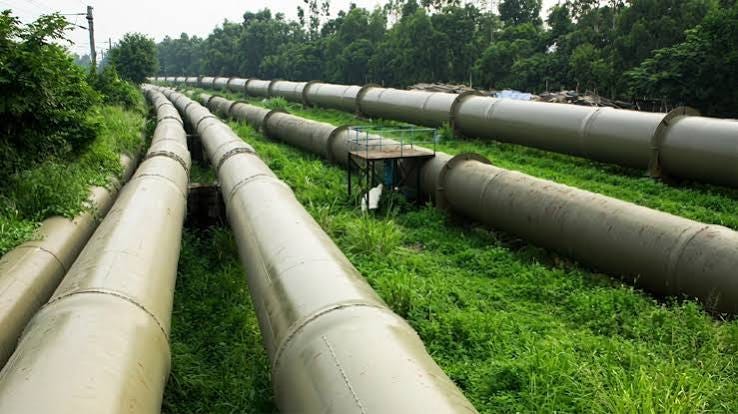
The Nigerian Midstream and Downstream Petroleum Regulatory Authority has announced plans to open a digital licensing round for gas distribution areas across the country before the end of 2026. The licensing round will follow the completion of a nationwide gas distribution gridding exercise expected in October.
The NMDPRA Chief Executive, Rabiu Umar, disclosed this at the Gas Investment Forum 2026, themed “Positioning Nigeria as Africa’s Global Gas Powerhouse.” “Under the licensing round, applicants will bid for gas distribution licences in the gridded areas available across the country, in the same way licensees apply for oil mining licences in the upstream sector,” Umar said.
The initiative forms part of efforts to move the natural gas sector away from its current fragmented infrastructure and access system towards a truly open-access regime. “Without infrastructure, reserves are potential. They will continue to have potential,” Umar said. “With infrastructure, gas becomes productivity and national resilience, especially in the light of the global headwinds that we see.” He said gas infrastructure must facilitate the movement of gas from wellheads to processing plants, pipelines, power stations, industrial clusters, transport corridors and homes, as well as export terminals.
On pipeline access, Umar said the focus was not only on expanding infrastructure but ensuring qualified market participants could use it. “Open access is not just about having pipelines, but about who can use them. It’s not a market, it’s a gate,” he said. The NMDPRA is rebuilding the Nigerian Gas Transportation Network Code to establish clear and consistently applied rules for injecting gas into pipelines and taking it out, including treatment of shrinkage. Companies with gas projects requiring connections of about 20 kilometres should be able to connect to existing pipelines under the law.
The regulator has also signed a cooperation framework with the Federal Competition and Consumer Protection Commission to address anti-competitive practices in the gas sector. The framework will tackle price fixing, market sharing, abuse of dominance, capacity hoarding and discriminatory access while protecting investment. “Markets run on trust, and trust runs on discipline,” Umar said.
This mirrors the Federal Government’s Decade of Gas Initiative launched in 2021, which aims to transform Nigeria into a gas-powered economy by 2030. The NMDPRA is targeting September 2028 for the domestic gas market to meet the conditions for maturity, ahead of the initial 2030 target.
Winners and Losers
Winners: The NMDPRA, which demonstrates regulatory capacity and a clear framework for gas sector development. Investors, who gain a transparent process for acquiring gas distribution licences. Industrial clusters, which stand to benefit from expanded gas access.
Losers: Incumbent pipeline operators, who face open-access obligations. Consumers, who may not see immediate benefits until infrastructure is built and gas reaches their homes. The Federal Government, which risks repeating the pattern of ambitious energy plans without delivery.
Bottom Line: Gas is Nigeria’s transition fuel. The reserves are proven. The infrastructure is not. The licensing round is a step. The test is whether it produces pipelines that work.