


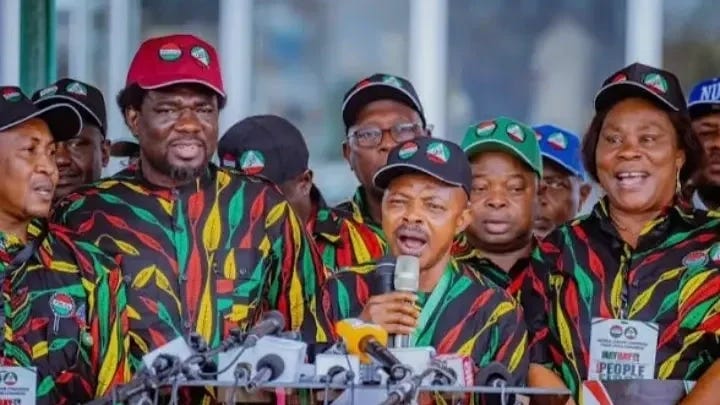
The Nigeria Labour Congress has maintained its two-week ultimatum to the Federal Government. The demand covers petrol price relief and fresh minimum wage negotiations. The ultimatum is driven by rising living costs. The NLC President, Joe Ajaero, spoke in Abuja on Monday. He said workers continue to struggle with food and transportation costs. The ₦70,000 minimum wage introduced in 2024 is no longer sufficient. He disputed claims that federal workers received salary increases of up to 133%.
The minimum wage was raised from ₦30,000 to ₦70,000 in 2024. The increase followed negotiations between the government and labour. Inflation eroded its value. In 2023, petrol subsidy was removed. Pump prices rose from about ₦185 to over ₦1,400 per litre. Wages did not keep pace. The NLC has threatened strikes repeatedly. It has called wage awards. The government has offered temporary payments. They expired. The cycle continues.
Ajaero said the government added ₦40,000 to salaries, not the 133% increase claimed. “Workers are still struggling,” he said. He urged the government to introduce measures before industrial disputes escalate. He raised concerns about unresolved labour disputes. He rejected claims that politicians were influencing organised labour. The ultimatum expires in two weeks. If unmet, the NLC may call a strike.
The Secretary to the Government of the Federation, George Akume, urged balance. He said the government must weigh workers’ demands against fiscal capacity. He warned against avoidable industrial disputes. The government has limited revenue. Debt service exceeds revenue in some months. Wage awards are expensive. The government must balance.
The warning strike by the Joint National Public Service Negotiating Council is ongoing. The NLC’s ultimatum adds pressure. The 2027 election is approaching. Labour unrest could affect the campaign. The government wants stability. Labour wants relief.
Winners: The NLC, which asserts leverage. Workers, if demands are met. Labour leaders, who gain visibility. Losers: The Federal Government, which faces pressure. Commuters, if strikes disrupt transport. Businesses, if industrial action escalates. Taxpayers, if wage awards require more borrowing. The economy, which absorbs lost productivity.
Bottom Line: The NLC kept its ultimatum. The deadline is in two weeks. Workers want petrol relief and wage talks. The government says fiscal capacity is limited. Both are right. The standoff continues. The next move is the government’s.