


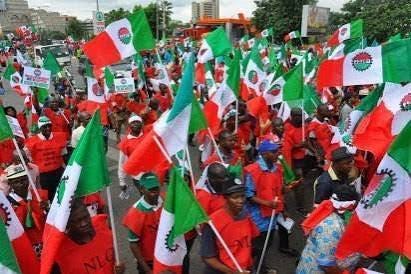
The Nigeria Labour Congress has demanded an immediate reduction in the price of petrol, a nationwide wage award and the commencement of negotiations for a new national minimum wage. The demands came in an Independence Day statement signed by NLC President Joe Ajaero, titled “Our Hope Depends on the Choices We Make and the Actions We Take”.
The union said petrol now sells at ₦1,430 per litre or higher in major cities and far more in remote areas. “The surge in transportation costs drives up the prices of food, school fees, rent, and nearly every necessity of life, while nominal wages remain stagnant,” the NLC said.
This mirrors the October 2023 agreement between the Federal Government and organised labour following the removal of the petrol subsidy. That agreement provided for a ₦35,000 monthly wage award for federal workers and called for consideration of similar relief for state and local government workers. The NLC now accuses the government of failing to fully implement the tax relief measures contained in that memorandum.
The union’s central argument is about the minimum wage. The current ₦70,000 national minimum wage was approved by President Tinubu in July 2024. The NLC says inflation destroyed its value before it was implemented. “The current ₦70,000 minimum wage was already destroyed by inflation before it was implemented,” the union said, demanding the immediate constitution of a tripartite committee to formulate a new wage standard for 2027.
The human impact is measurable. At ₦1,430 per litre, the entire ₦70,000 monthly minimum wage buys just under 49 litres of petrol. For a worker who commutes daily and uses public transport, the fuel price is not an abstraction. It is the cost of getting to work, the cost of food delivered to markets, and the cost of every item that moves by road.
The NLC also linked insecurity to economic hardship. It argued that violence affecting farming, education and healthcare delivery was compounding the cost-of-living crisis. On the 2027 elections, the union warned against treating workers’ organisations as electoral tools.
Winners and Losers
Winners: The NLC, which uses the Independence Day platform to amplify its demands. Workers, who gain a public advocate for wage increases and fuel price reductions.
Losers: The Federal Government, which faces renewed pressure on subsidy and wage policy. State governments, which have not implemented the ₦35,000 wage award for their workers. Commuters and consumers, who continue to absorb the pass-through costs of high fuel prices.
Bottom Line: A wage award is not a permanent solution. It is an emergency measure. The NLC is right to demand it. But the structural problem remains: Nigeria’s economy cannot deliver affordable living on imported fuel and stagnant wages.