


The Nigeria Immigration Service has intensified its cybersecurity framework. It held a training seminar for its personnel. The seminar took place at the Service Headquarters in Abuja on 29 October 2026. It was driven by the ICT and Cybersecurity Directorate. The theme focused on digital habits and responsible online practices.
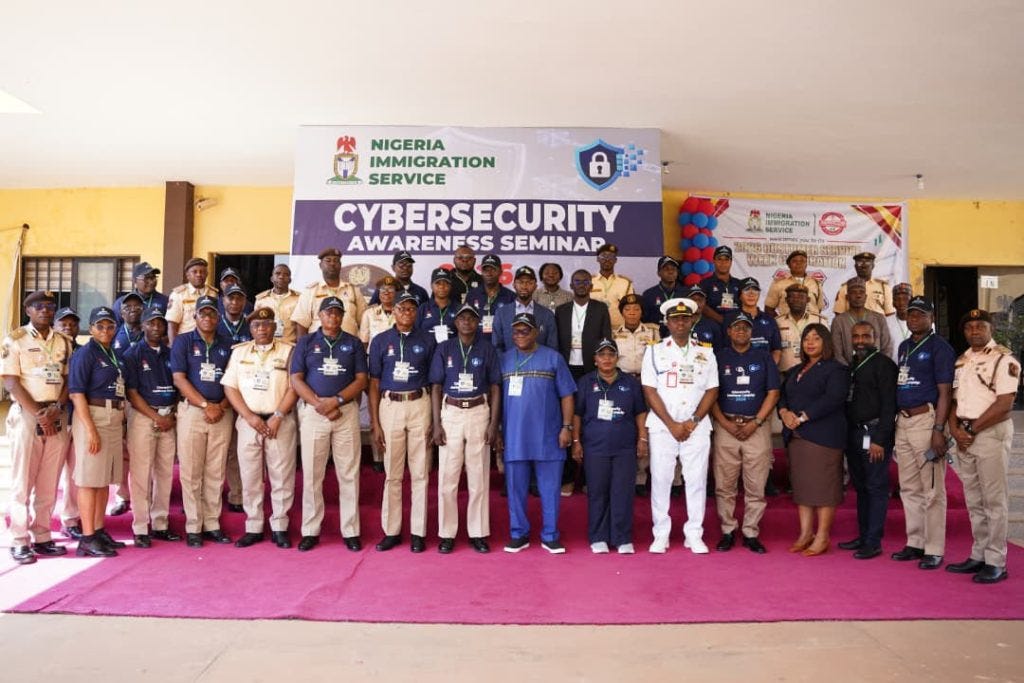
The NIS manages sensitive national data. Passport records, visa applications and border entry logs sit in its systems. Cyberattacks on government agencies have increased. In 2024, the Nigeria Data Protection Commission reported a rise in data breaches. In 2025, several agencies faced phishing attacks. The NIS is training officers to recognise and report threats. The seminar is part of a broader effort to build a cyber-resilient institution.
The seminar featured presentations from the Department of State Services, the United Nations Office on Drugs and Crime, the Nigeria Data Protection Commission and the National Information Technology Development Agency. Topics covered inter-agency collaboration for critical infrastructure protection, combating cybercrime through law enforcement and international cooperation, data protection and privacy in the digital age, and human risk management in the digital workplace. Galaxy Backbone Limited facilitated a plenary session on securing critical systems through inter-agency collaboration. The Comptroller-General, Kemi Nandap, said cybersecurity is a collective responsibility. She urged officers to remain vigilant. She tasked them to observe established security protocols and promptly report suspected threats. She called for continuous capacity building and institutional collaboration. The seminar reaffirmed the service’s commitment to building a cyber-resilient institution through technology upgrades and compliance with global best practices.
Winners: The NIS, which shows vigilance. Officers, who gain training. The DSS, UNODC, NDPC and NITDA, which gain visibility. The public, if data is protected. Losers: Cybercriminals, who face a better-defended target. Officers who ignore protocols, who face risk. The service, if the training is not sustained. Taxpayers, if breaches occur despite the investment.
Bottom Line: The NIS is training its officers. Cyber threats are real. Data breaches cost money and trust. The seminar is a start. Continuous training is the test.