


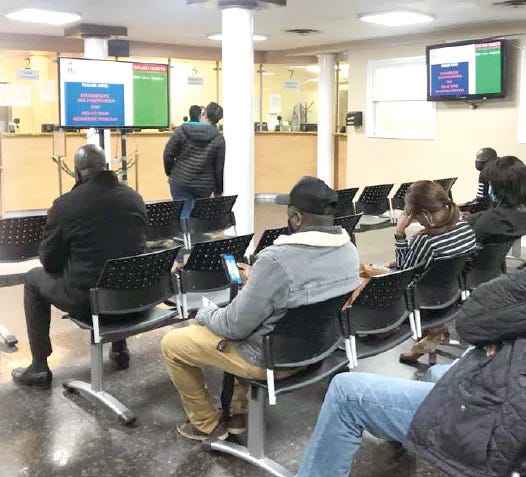
The Nigeria Immigration Service (NIS) has enrolled 2,296 applicants in the first six operational days of its Special Passport Intervention Exercise in the UK. The exercise began on 7 September. It aims to clear a backlog of pending applications and address processing delays. The NIS spokesperson, Akinsola Akinlabi, said applicants with confirmed appointments recorded sustained turnout.
Nigerian passport services abroad have long been plagued by delays. In 2021, the NIS faced criticism over backlogs in the UK, US and South Africa. Nigerians queued for hours at embassies. Many travelled home solely to renew passports. In 2023, the government introduced online applications and decentralised processing. The problems persisted because demand outpaced capacity.
The London Centre enrolled 587 applicants. The Manchester Centre processed 1,709. Manchester accounted for about 74% of the total. The Comptroller-General, Kemi Nandap, visited both centres to monitor the exercise. She interacted with the Nigerian community. Passport production and dispatch have started for those who completed enrolment. The NIS urged applicants to cooperate with officials. The intervention follows a Federal Government directive to ease delays for diaspora Nigerians. The UK is a major destination for Nigerian professionals. Many hold expired or expiring passports. A valid passport is required for work, study and residency. The extension by two weeks, announced earlier, reflects the scale of demand. The Manchester centre’s dominance suggests a large Nigerian population in northern England. The London centre’s lower figure may reflect appointment bottlenecks or better distribution.
Winners: Nigerians in the UK who secure appointments and receive passports. The NIS, which shows responsiveness. The Nigerian High Commission, which avoids criticism. Losers: Nigerians who miss the window and face another wait. NIS officials deployed abroad, who face heavy workloads. Taxpayers who fund the intervention. The system’s credibility, which erodes with each temporary fix.
Bottom Line: Two thousand two hundred and ninety-six enrolments in six days. The backlog is clearing. The system still cannot meet demand without emergency interventions.