


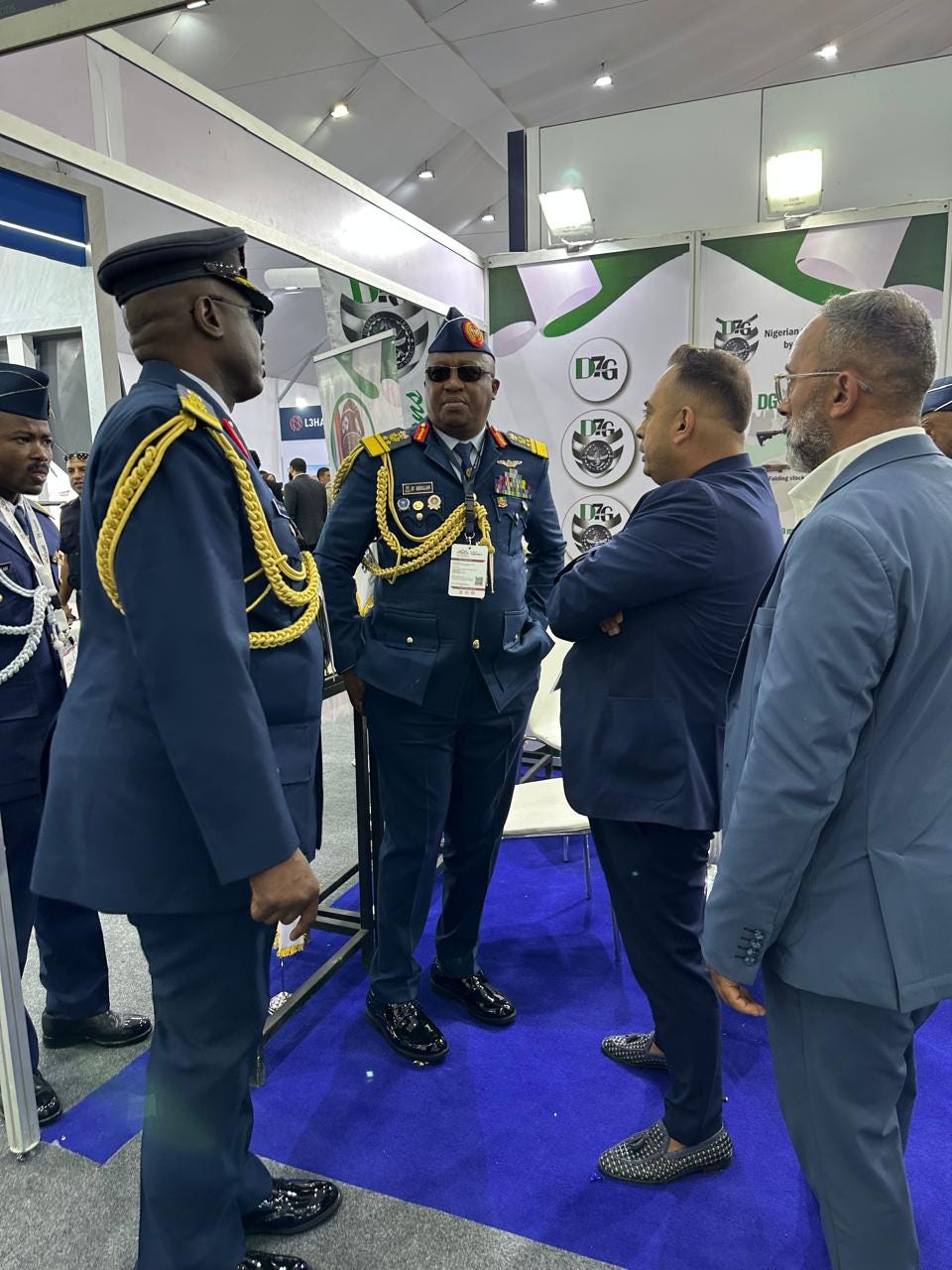
Nigeria wants to sell weapons to Africa. That is the message from DICON-D7G, a partnership between the Defence Industries Corporation of Nigeria and D7G Limited. Its chief executive, Osman Chennar, said on Saturday that Nigeria is positioning itself as a major hub for indigenous defence manufacturing. The country showcased its capabilities at the El Alamein International Airshow in Egypt from 8 to 10 September 2026. It was Nigeria’s third major international defence exhibition, following Doha and Ankara.
Chennar said the initiative aims to reduce dependence on imported military hardware and make Nigeria a supplier of equipment to other African countries. He disclosed that arrangements are at an advanced stage for a military jetty in Lagos to strengthen supply capabilities.
The ambition is not new. DICON was established in 1964. It has produced small arms, ammunition and vehicles for decades. None of these scaled. Nigeria still imports the overwhelming majority of its military hardware. The gap between DICON’s stated capacity and its actual output has been a running theme in defence procurement debates.
The partnership with D7G Limited is a recognition that state-owned defence manufacturing has underperformed. A private-sector partner brings capital, management discipline and commercial accountability. But it also raises questions about procurement transparency, pricing and the risk of a new monopoly. The military jetty in Lagos, if built, will be a strategic asset. It will also be a choke point for the supply chain.
Regional export ambitions face a harder constraint: trust. Nigeria’s neighbours buy from China, Turkey, the United States and Russia for reasons beyond price. They buy for reliability, interoperability and political alignment. A Nigerian defence manufacturer entering that market must prove it can deliver on time, at scale and without political strings.
The El Alamein appearance is a signal. Nigeria can build a defence industrial base. Whether it can sustain one is a different question.
Winners: D7G Limited, which gains a strategic partnership with a state corporation. Nigerian military planners, if local production reduces import bills. Regional buyers, if they get a cheaper alternative.
Losers: Traditional arms exporters to Africa, if Nigeria captures market share. Nigerian taxpayers, if the partnership requires subsidies without delivering exports. Transparency advocates, if procurement details remain opaque.
Bottom Line: Nigeria has been trying to build a defence industry since 1964. The D7G partnership is a new approach to an old problem.