


The Nigerian government has signed a readmission agreement with the European Union. The deal would facilitate the return of Nigerians living illegally in EU member states. The Ministry of Foreign Affairs announced it on Wednesday. Negotiations had been ongoing for nearly a decade. About 260,000 Nigerians legally reside in the bloc. An IOM report recorded 27,234 irregular arrivals of Nigerian nationals in Europe between 2017 and March 2024.
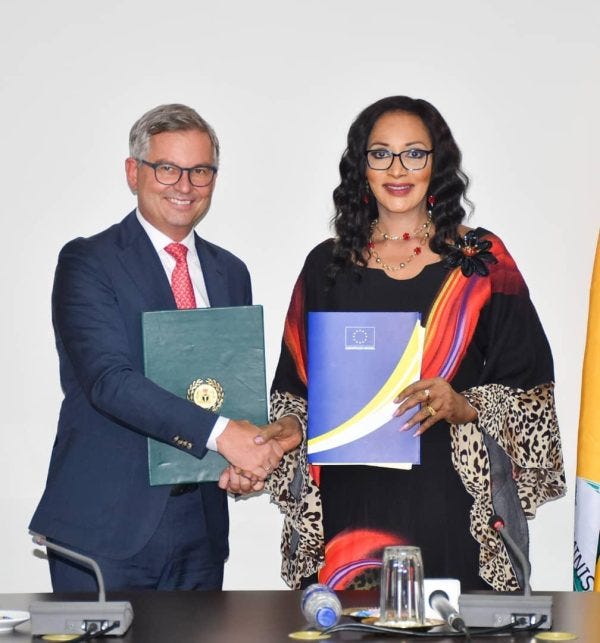
The agreement was signed by Foreign Affairs Minister Bianca Odumegwu-Ojukwu and EU Commissioner for Internal Affairs and Migration Magnus Brunner. It covers Nigerians with no legal grounds to remain in EU countries. Odumegwu-Ojukwu said the agreement underscored Nigeria’s commitment to the welfare and dignified return of its citizens. Interior Minister Olubunmi Tunji-Ojo said a key objective is to promote a legal and mutually beneficial migration management system.
The deal identifies three categories of people subject to readmission. The first are Nigerians with valid travel documents. The second are those who travelled with documents but later lost or destroyed them. The third are those who travelled without identification. The government is modernising border management through automation and national identity database integration. That will help verify nationality quickly.
This mirrors the 2018 EU emergency trust fund for Africa, which funded migration control and reintegration programmes. It also echoes the 2022 Libya migrant crisis, where Nigeria repatriated thousands of citizens stranded in detention camps. The difference now is that the EU wants a formal legal instrument. Readmission agreements are the architecture of Europe’s externalised border.
The winners are the EU, which gains a legal channel for returns; Nigeria, which gains a formal process for dignified returns; and migrants with valid documents, who can travel without stigma. The losers are irregular migrants facing removal; smuggling networks that lose business; and Nigerian communities that receive returnees without reintegration support.
Winners: EU; Nigerian government; documented migrants.
Losers: Irregular migrants facing return; smuggling networks; communities without reintegration support.
Bottom Line: A readmission deal is only as humane as the reintegration programme that follows it. Nigeria must prepare to receive the people it has agreed to take back.