


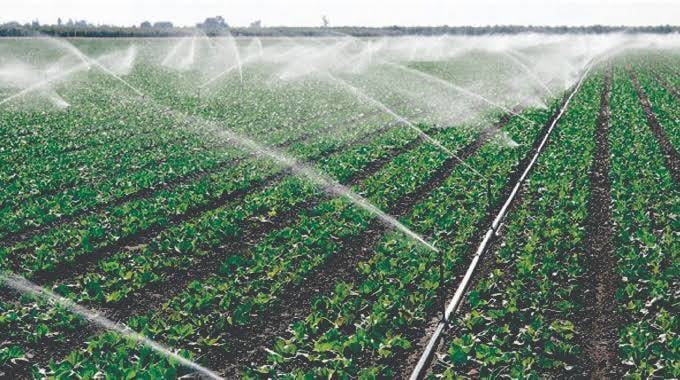
Nigeria has sought deeper cooperation with China in water-saving agriculture, soil management and scientific research to address agricultural challenges in the northern part of the country and the Lake Chad basin. Dr Mukhtar Muhammed, Permanent Secretary, Federal Ministry of Innovation, Science and Technology, made this known on Saturday at the “Seasonal Life and Harmonious China” Cultural Exhibition at the China Cultural Centre in Abuja.
Muhammed said Nigeria could draw lessons from China’s experience in using science and technology to improve agricultural productivity in areas affected by water scarcity and land degradation. He said his recent technical visit to China, particularly the Yangling High-Tech Agricultural Demonstration Zone in Shaanxi Province, had demonstrated the potential of applying scientific innovation to Nigeria’s agricultural challenges.
“In Yangling, often referred to as China’s ‘Agricultural Silicon Valley’, we witnessed the seamless integration of modern technology with traditional farming. For example, we observed advanced water-saving irrigation systems and soil monitoring technologies that allow farmers to cultivate crops in arid conditions with minimal water wastage,” he said.
Muhammed said the ministry would seek stronger collaboration between Nigerian and Chinese ministries of science and technology, research institutions, universities and industries. The proposed cooperation would focus on practical areas including sustainable agriculture, water management, agro-processing and scientific research. Nigeria also plans to expand scholarships and STEM training for Nigerian scientists in Chinese universities.
The request for Chinese assistance reflects a broader recognition that Nigeria cannot solve its agricultural challenges alone. China’s experience in transforming its own agriculture sector offers valuable lessons for Nigeria. The focus on water-saving technology is particularly relevant for the northern states and the Lake Chad region, where water scarcity is a major constraint on agricultural productivity.
This echoes the 2010s agricultural cooperation between Nigeria and China, which also sought to transfer technology and expertise. The mechanism then was different, but the result was the same: a focus on improving agricultural productivity.
The winners: Nigerian farmers, who may benefit from improved technology; and Nigeria-China relations, which are strengthened. The losers: the Nigerian government, which must ensure the cooperation translates into tangible results; and the Nigerian public, who must wait for the benefits.
Bottom Line: Nigeria is looking to China for agricultural technology. The focus is on water-saving and soil management. The question is whether the cooperation will deliver results or remain a talking point.