


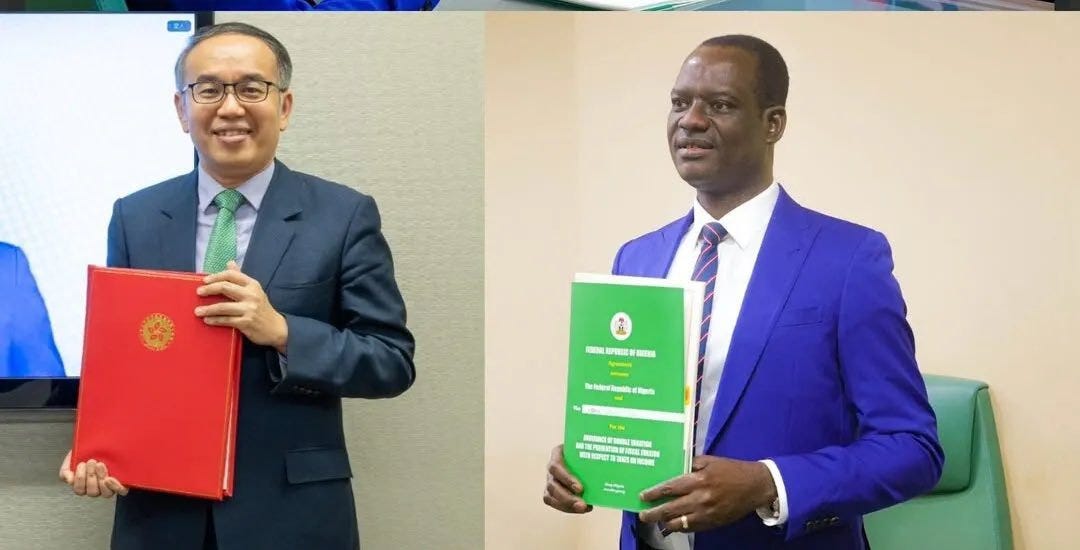
Nigeria and the Hong Kong Special Administrative Region of China have signed a bilateral agreement to eliminate double taxation and strengthen economic cooperation between the two jurisdictions. The agreement, signed virtually on Monday, aims to prevent double taxation of income, curb tax evasion and avoidance, and create a more predictable tax environment for businesses and investors operating across both economies.
Nigeria’s Minister of Finance and Coordinating Minister of the Economy, Taiwo Oyedele, signed on behalf of the Federal Government, while Hong Kong’s Secretary for Financial Services and the Treasury, Christopher Hui, signed on behalf of the Hong Kong Special Administrative Region. The agreement reduces withholding tax on dividends, interest and royalties paid by Nigerian companies to Hong Kong residents from 10% to 7.5%.
Speaking during the ceremony, Oyedele described the agreement as a significant milestone in the growing economic relationship between Nigeria and Hong Kong. “It forms part of Nigeria’s broader strategy of expanding its network of tax treaties to support trade, attract investment, and strengthen international tax cooperation,” the ministry said.
Oyedele said the agreement reflects Nigeria’s commitment to building a transparent, predictable and investor-friendly tax environment that supports trade, investment and sustainable economic growth. He described Hong Kong as a leading international financial and commercial hub, expressing confidence that the treaty would facilitate stronger private-sector engagement and open new avenues for mutually beneficial partnerships.
The agreement comes at a critical time as Nigeria seeks to deepen its integration into global value chains and expand economic partnerships across Asia.
This echoes the 2020s trend of African countries signing double taxation agreements with Asian financial hubs to attract investment. The mechanism then was different, but the result was the same: a strategic move to integrate into global financial networks.
The winners: Nigerian businesses with operations in Hong Kong, who will benefit from reduced withholding taxes; the Nigerian government, which gains a more predictable tax environment; and investors, who face lower barriers to cross-border investment. The losers: the Nigerian tax authorities, which must now enforce the agreement, and countries that have not signed similar deals with Hong Kong.
Bottom Line: Nigeria has signed a double taxation agreement with Hong Kong. That is good for business. The question is whether it will translate into real investment.