


Nigerians consumed 11.94 million terabytes of internet data in the first eight months of 2026. That is about 90% of the volume recorded throughout 2025. In August alone, consumption reached 1.76 million terabytes. The Nigerian Communications Commission released the figures.
Nigeria’s data consumption has grown rapidly since the pandemic. Remote work, streaming and social media drove early growth. The rollout of 4G and 5G networks accelerated it. In 2020, monthly consumption was under 200,000 terabytes. By 2024, it had crossed one million terabytes monthly. The trend reflects growing internet adoption and more intensive use. Telecom operators have invested in capacity. Demand continues to outpace supply.
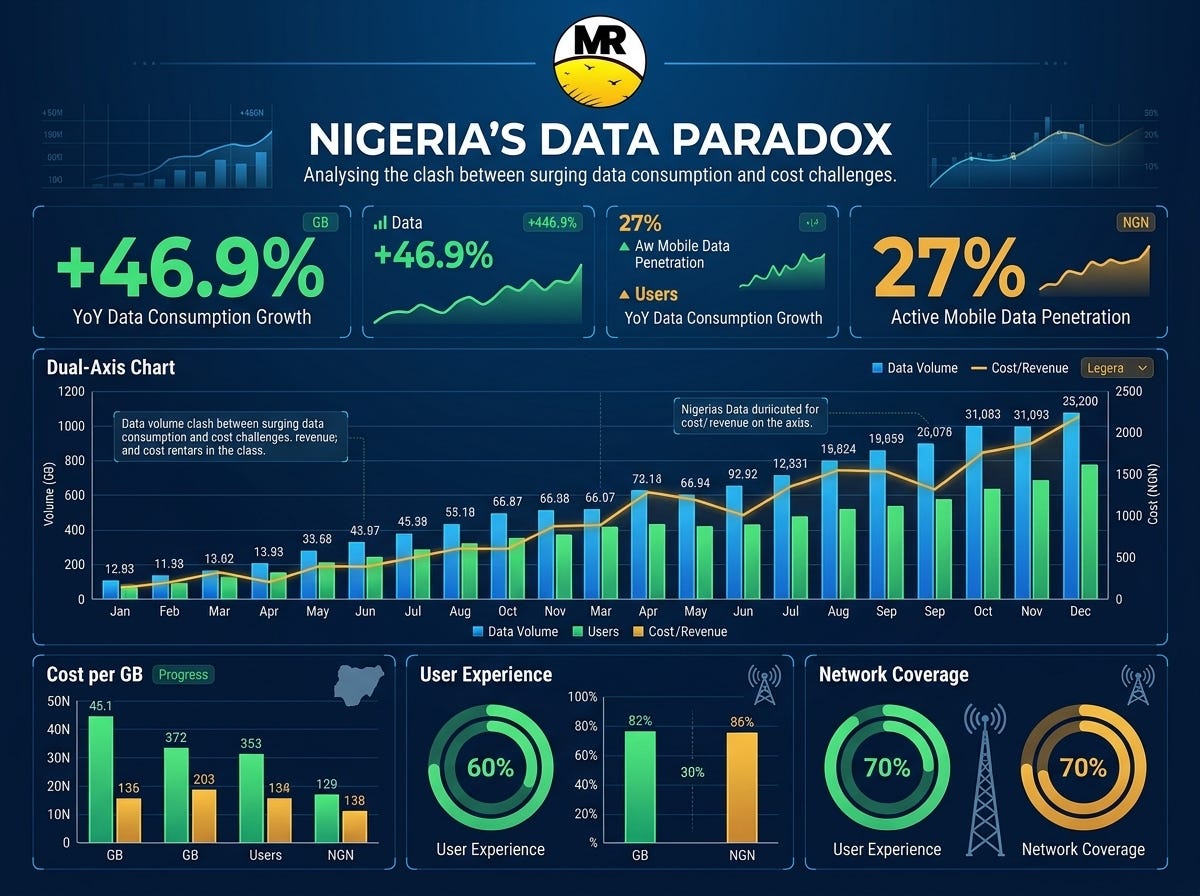
Part of the increase comes from new connections. About 800,000 new internet subscriptions were recorded in August. But existing users are also consuming more. Osita Odafi, a telecom industry expert, said video platforms like YouTube, TikTok, Instagram Reels and Netflix are driving demand. High-definition streaming and autoplay increase consumption. Online banking, digital payments, cloud services, remote work tools, online education and AI applications also contribute.
4G’s share of mobile subscriptions rose from 54.31% in July to 54.77% in August. 5G increased from 4.74% to 4.92%. Together they accounted for about 60% of mobile subscriptions. Nigeria recorded 197.42 million telecommunications subscriptions in August. That is up 2.31 million from July. MTN recorded 84.56 million internet subscriptions. Airtel followed with 56.94 million. Globacom recorded 15.76 million. The NCC introduced zero-rated access to educational platforms on 1 October. That may drive further demand.
Winners: Telecom operators, which gain revenue. Content providers, which gain viewers. Cloud services, which gain users. The digital economy, which expands. Losers: Operators unable to expand capacity. Consumers, if quality of service falls. Rural areas, which lack coverage. The NCC, if it cannot enforce standards.
Bottom Line: Nigerians used 90% of 2025’s data in eight months. Demand is surging. Networks must keep pace. Investment in fibre, capacity and spectrum is essential. Without it, quality will suffer.