


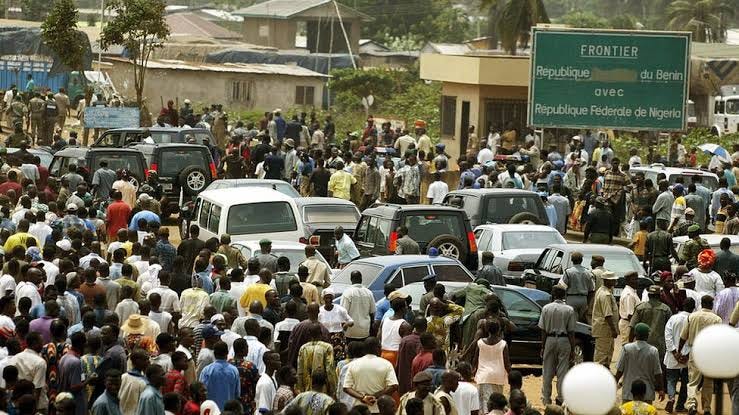
Nigeria and Benin Republic are integrating their customs systems. The goal is to reduce delays at the Sèmè-Kraké border and speed up the movement of legitimate goods and travellers. The proposed real-time data exchange will let the two customs administrations share declarations, manifests, transit information, risk profiles and enforcement alerts.
The Sèmè-Kraké border has been a bottleneck for decades. It sits on the Abidjan-Lagos corridor, which carries about 70% of West Africa’s transit trade. The border operates round the clock, yet traders face hours of delays, multiple checkpoints and extortion. In 2018, Nigeria and Benin signed an agreement to establish a One-Stop Border Post. Implementation has been slow. The customs systems gap is the latest obstacle to be addressed.
The Comptroller-General of the Nigeria Customs Service, Bashir Adewale Adeniyi, disclosed the plan during a joint assessment of the border post. He said the two administrations work under one roof but not on one system. A declaration lodged on one side is not visible to the other in real time. The proposed exchange would allow transit consignments to be tracked from origin to destination and enforcement alerts to be shared while still relevant.
Adeniyi framed the stakes in economic terms. “Every hour lost at this gate is multiplied across thousands of consignments and tens of thousands of travellers, and is paid for in the price of goods in markets from Cotonou to Lagos,” he said. He noted that women account for over 70% of informal cross-border traders in Africa, and about 22% of Benin’s informal exports go to Nigeria. The border is not just a trade route. It is a livelihood corridor for some of the region’s most vulnerable workers.
The Director-General of Benin Customs, Raouf Malehossou Aboudou, said a joint border post would reduce stress for traders and improve efficiency. He described Adeniyi as pragmatic and noted that the Nigerian delegation had visited Zimbabwe to study how One-Stop Border Posts function there. The technical work is underway. The political will exists on both sides. The question is implementation speed.
Winners: Cross-border traders, particularly women, who face fewer delays and lower costs. Nigerian and Beninese customs, which gain real-time intelligence. Consumers in both countries, if lower logistics costs feed into prices. The Abidjan-Lagos corridor, which becomes more competitive. Losers: Officials who profit from delays and extortion. Informal traders who lack documentation and may not benefit from formalised systems. Smugglers, who face better-coordinated enforcement.
Bottom Line: Two customs administrations under one roof but not on one system. Linking them is a technical fix. Ending the delays that feed corruption is political.