


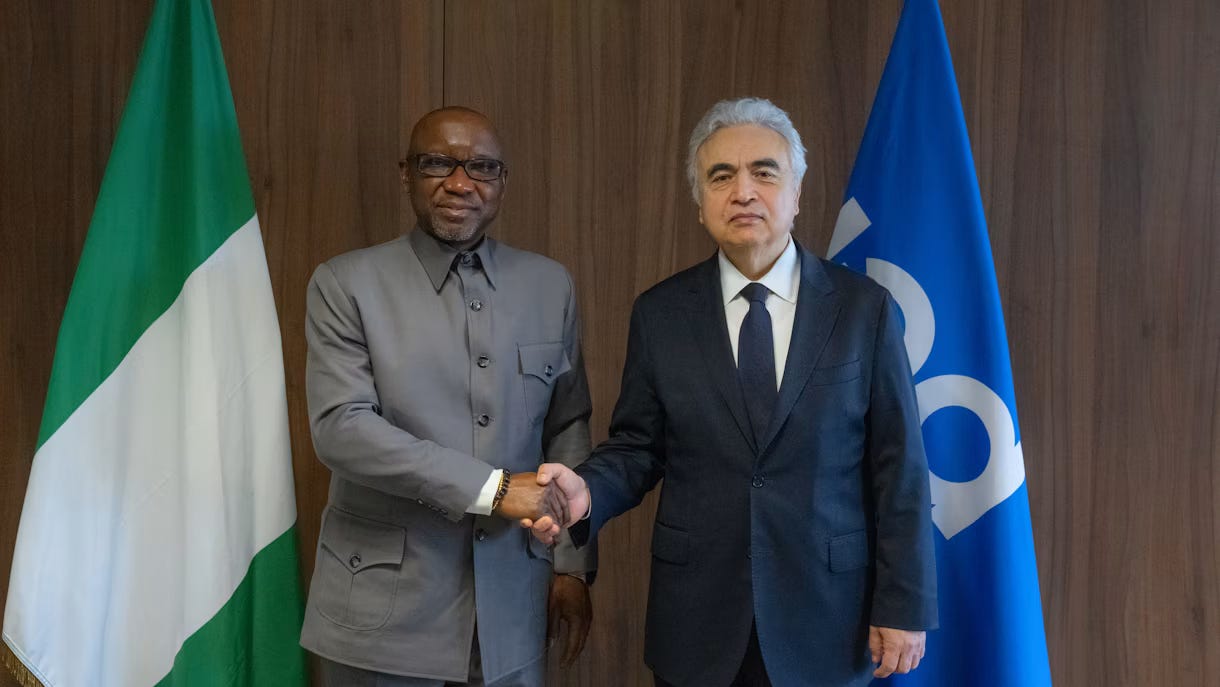
Nigeria has been admitted as the newest associate member of the International Energy Agency (IEA), marking a major milestone for the country’s energy sector. The Minister of State for Petroleum Resources (Gas), Ekperipe Ekpo, announced the development at the NOG Energy Week 2026 conference in Abuja, confirming that Nigeria became an associate member on July 2.
The IEA’s governing board unanimously approved Nigeria’s application, which was submitted in May 2026. The accession process took less than two months. IEA Executive Director Fatih Birol described it as “the fastest accession process we have ever had for any applicant country”. Nigeria is the agency’s 14th associate member and the first OPEC country to join in that capacity.
Speaking at the conference, Ekpo said the development positions Nigeria to play a stronger role in global energy discussions while advancing a balanced energy transition. He also revealed that Nigeria has assumed the presidency of the 2026 Gas Exporting Countries Forum ministerial meeting, while Philip Mshelbila was elected the forum’s secretary-general.
The IEA said Nigeria’s membership expands a network that now represents more than 80% of global energy demand. “Nigeria becoming part of the world’s energy authority marks a milestone for global energy governance,” Birol said in a statement. “As Nigeria works to strengthen energy security, support economic growth and expand energy access, deeper cooperation with the IEA will bring important benefits for both sides”.
The practical benefits are significant. Nigeria will have access to the IEA’s real-time energy data on oil markets, gas markets, new technologies and investment flows. The agency will also provide technical assistance on energy policy, security and energy access.
From a Nigerian vantage point, the membership is a diplomatic coup. Nigeria has achieved what no other OPEC country has managed: a seat at the table of the world’s most influential energy policy organisation. The country now has access to information and networks that could help it navigate the energy transition while maximising the value of its hydrocarbon resources.
The winners: Nigeria, which gains global influence and access to critical energy data. The losers: competing African countries that have not yet secured IEA membership, and perhaps the environment, if Nigeria uses its new influence to slow the energy transition.
Bottom Line: Nigeria just joined the world’s most exclusive energy club. The question is whether it will use the membership to shape the global energy agenda or simply to protect its oil interests.