


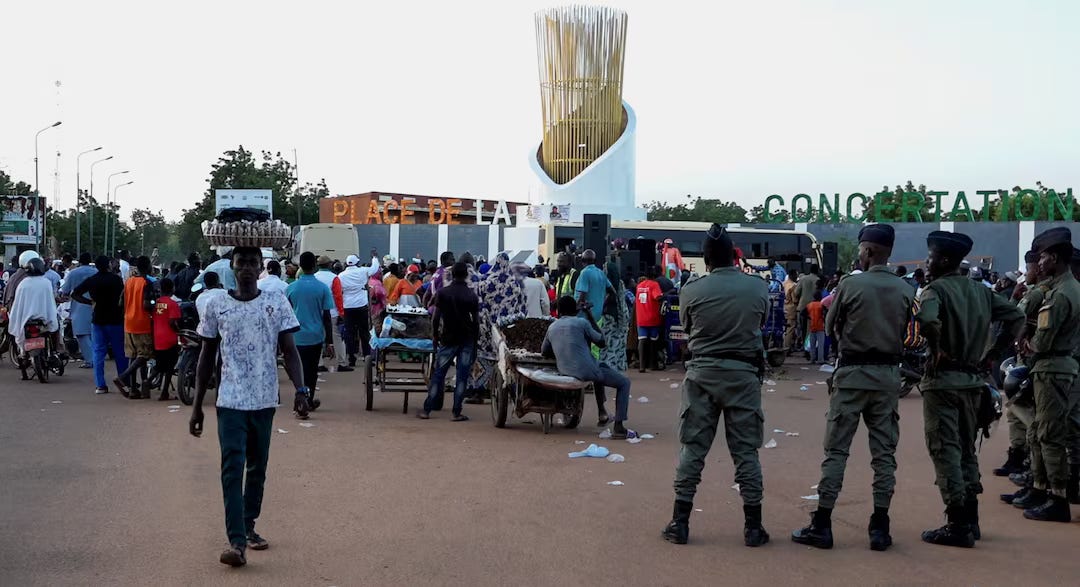
Niger’s military government says it has regained control after soldiers launched an apparent mutiny in the capital, Niamey. Heavy gunfire and explosions were reported overnight around Base 101, a military facility at the main airport, and the Plateau district, where the presidential palace and other key institutions are located. The Defence Ministry said security forces had contained the disturbance, although some security sources reported that mutineers remained at the airport.
The unrest involved soldiers from several areas in southwestern Niger, with reports suggesting grievances over military conditions and heavy frontline casualties. The incident adds to security concerns under Niger’s military-led government, which seized power in a 2023 coup.
The Nigerian stake is clear. Niger’s instability is a direct threat to Nigeria’s northern border. The country’s military government has been struggling to contain jihadist insurgencies, and the mutiny suggests that the military itself is fracturing. The incident could further destabilise the Sahel region, creating a security vacuum that could be exploited by terrorist groups.
From a Nigerian vantage point, the mutiny is a warning. Nigeria must strengthen its own military and intelligence capabilities to prevent similar unrest. The government must also engage diplomatically with Niger to support stability in the region.
This echoes the 2023 coup in Niger, which also destabilised the region. The mechanism then was different, but the result was the same: a security vacuum that could be exploited by terrorists.
The winners: none. The losers: the people of Niger, who face continued instability; and the Nigerian government, which must deal with the consequences.
Bottom Line: Niger’s military government says it has regained control. The mutiny is a sign of instability. The question is whether the government can maintain control or the situation will escalate.