


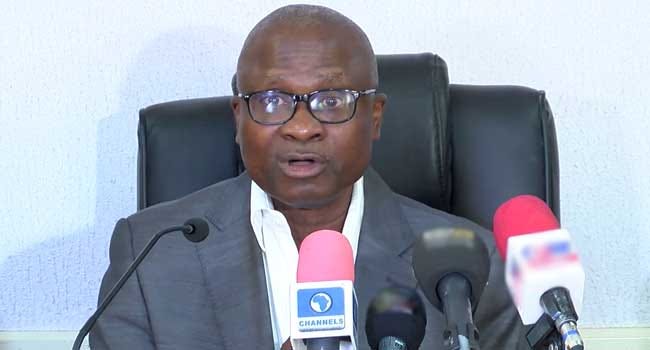
The Director-General of the Nigeria Centre for Disease Control and Prevention, Jide Idris, has said the 2027 general election could be postponed if the Ebola outbreak spreads widely. He spoke on Channels Television’s Politics Today. He said there is currently no need for postponement. He said no government would use Ebola as a political weapon.
Nigeria confirmed its first Bundibugyo Ebola case in the Federal Capital Territory on 20 October 2026. The patient is a 42-year-old woman who travelled from Uganda. She arrived in Abuja through Addis Ababa on 3 October. She developed symptoms four days later. She visited two private health facilities before the NCDC was notified on 19 October. Her infection was confirmed the following day. Fifty-three primary contacts are being monitored. A suspected case in Rivers State tested negative. The outbreak in DR Congo has caused nearly 10,000 cases and over 4,700 deaths.
Idris said the health sector is tracking the outbreak. He said the virus was detected in Nigeria despite monitoring in DR Congo. He said population movement and flights made importation likely. He said the election could be postponed only if the outbreak becomes widespread. “We hope the election will not be postponed, but if the thing gets wide enough that might be considered,” he said. “As at now, there is no need for that.”
The Coordinating Minister of Health, Muhammad Pate, projected 7 December 2026 as a possible date for declaring the outbreak over. The date depends on no new confirmed cases and validation by the NCDC and WHO of the 42-day countdown. The presidential election is scheduled for 16 January 2027. The governorship election is on 6 February 2027.
The opposition reacted. The SDP presidential candidate, Adewole Adebayo, warned against postponement. He said one case is not an epidemic. He said Nigeria handled Ebola transparently in 2014. He said the election must proceed. The NCDC’s remarks were cautious. They were also political. Any postponement would require INEC and the government to act. No formal process has begun.
Winners: The NCDC, which shows vigilance. The health sector, which gains attention. Losers: The government, which faces speculation. INEC, which faces uncertainty. Voters, who face another layer of anxiety. The opposition, which sees a potential excuse for delay. The electoral process, which faces a new risk.
Bottom Line: The NCDC raised the possibility of postponement. It did not recommend one. The outbreak is contained for now. The election is in January. The health sector must keep it that way.