


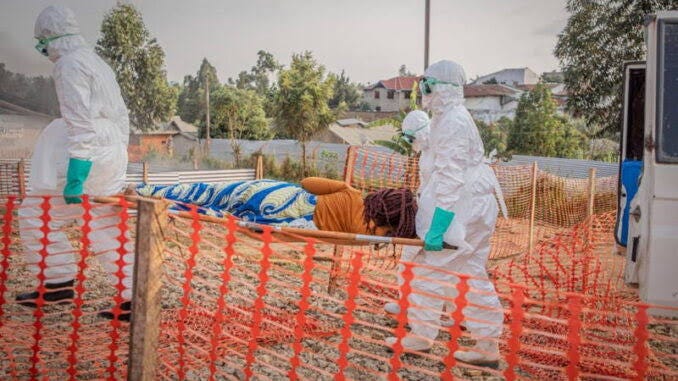
Nigeria’s disease control agency is investigating another suspected Ebola case. The NCDC confirmed an infection in a 42-year-old woman earlier this month. The woman returned from Uganda. The NCDC is investigating the new suspected case. A suspected case in Rivers State tested negative. The NCDC Director-General, Jide Idris, disclosed the developments.
Nigeria’s last major Ebola encounter was in 2014. A Liberian diplomat imported the virus to Lagos. The response was praised globally. It relied on rapid contact tracing and isolation. The current case is the first in 2026. The patient arrived in Abuja through Addis Ababa on 3 October. She developed symptoms four days later. She visited two private health facilities before the NCDC was notified on 19 October. Her infection was confirmed the following day. The delay is concerning.
Idris said 53 primary contacts linked to the confirmed patient have been identified. They are being monitored. Nigeria has about 12 public and private laboratories that can test for Ebola. The NCDC has urged health facilities to strengthen screening and infection prevention and control measures. It has asked identified contacts to cooperate with monitoring teams.
The response is faster than in 2014. The NCDC has digital tools. It has laboratory capacity. It has experience. But the timeline remains troubling. The patient was symptomatic for days before notification. She visited two private facilities. Health workers there were exposed. Contact tracing began late.
The public reaction was mixed. Some recalled the 2014 response. Others worried about misinformation. The NCDC has urged citizens to use verified channels. It has warned against panic.
Winners: The NCDC, which demonstrates preparedness. Health workers, who gain tools. Contacts, who gain monitoring. Losers: The patient, who faces illness and isolation. Contacts under monitoring. Health workers at the two private facilities. The FCT health system, which faces strain. Anyone exposed before the alert.
Bottom Line: A new suspected case is under investigation. 53 contacts are being monitored. The NCDC is responding. The delay is concerning. Nigeria must strengthen screening at entry points and in private facilities.