


The naira is facing renewed pressure in the parallel foreign exchange market as seasonal demand for summer travel, overseas school fees and business travel increases. The currency weakened to 1,425 per dollar on Thursday, down from about 1,370 in February, widening the gap between the official and parallel market rates to about 46 naira.
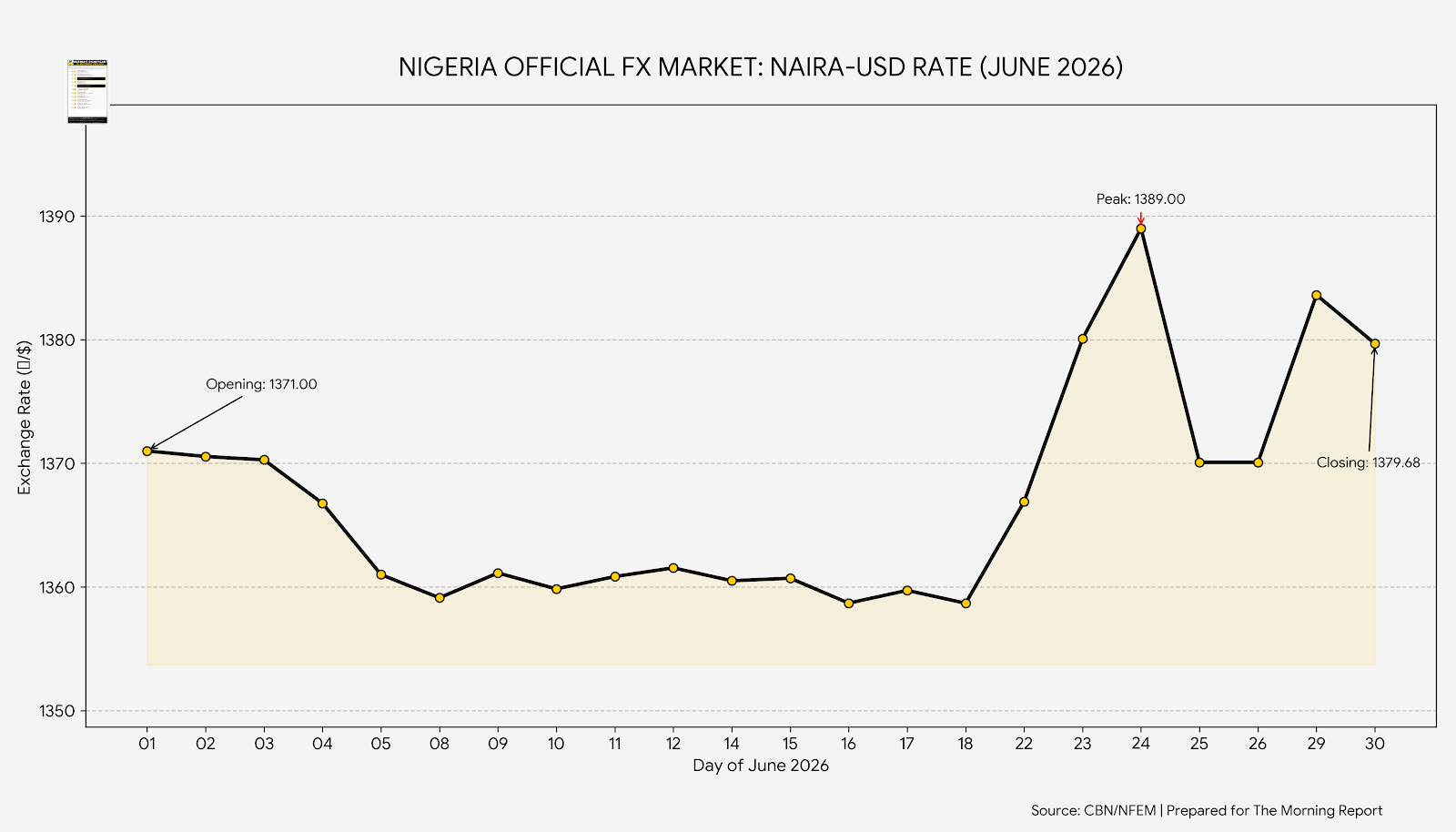
In the official market, the naira remained relatively stable, closing at 1,378.43 per dollar on Thursday, slightly up from 1,379.07 the previous day. Despite the pressure, Nigeria’s foreign reserves have continued to grow, reaching ₦51.71 billion as of July 8, 2026, up 38.71 percent from ₦37.28 billion a year earlier.
Ayokunle Olubunmi, head of financial institutions ratings at Agusto & Co., attributed the pressure to seasonal demand. “This is definitely due to summer travel and school fees demand,” Olubunmi said, adding that the ongoing Dangote IPO and pre-election political activities have also increased foreign exchange demand.
Professor Uche Uwaleke, a capital market academic, offered a more nuanced view. “A widening gap more often reflects a combination of factors: insufficient supply in the official market, expectations of further naira depreciation, portfolio outflows or delayed inflows, as well as speculative and precautionary dollar purchases,” Uwaleke said. “School fees and summer travel can add pressure, but by themselves they are unlikely to fully explain a significant divergence between the official and parallel exchange rates.”
The CBN’s February 2026 economic report showed that net foreign exchange inflows into the economy moderated to $6.92 billion, down from $9.22 billion in January. Aggregate FX inflows declined to $9.43 billion from $12.23 billion, while aggregate outflows also fell to $2.50 billion from $3.01 billion.
The report also showed that demand for foreign exchange remained concentrated in the productive sectors. The industrial sector accounted for the largest share of visible import FX utilisation at 37.90 percent, followed by manufactured products with 25.04 percent and the oil sector with 19.63 percent, reflecting continued reliance on imported raw materials, machinery and petroleum products.
In May, the CBN introduced a partial relaxation of its cashless policy on Personal Travel Allowance (PTA) and Business Travel Allowance (BTA) under the revised Foreign Exchange Manual, which took effect on June 1. Under the new framework, 75 percent of PTA and BTA disbursements will continue to be processed electronically through debit or credit cards, while 25 percent may now be paid in cash.
This mirrors the 2022 summer travel season, when the naira came under similar pressure as Nigerians rushed to buy dollars for overseas travel and school fees. The mechanism then was different, but the result was the same: a widening gap between the official and parallel markets and growing pressure on the naira.
The winners: Nigerians who hold dollars; Bureau de Change operators who profit from the widening gap. The losers: Nigerians who need dollars for school fees and travel; the CBN, which faces renewed pressure on the naira; and the Nigerian economy, which suffers from currency volatility.
Bottom Line: The naira is sliding again. Summer travel and school fees are the excuses. The underlying problem is a currency that cannot find its footing.