


The National Automotive Design and Development Council has said Nigeria’s automotive future must be built locally, not defined by imported vehicles. The Director-General, Joseph Osanipin, spoke at a press conference in Abuja. The event was held with BKG Exhibition Limited ahead of the 26th Abuja International Motor Fair.
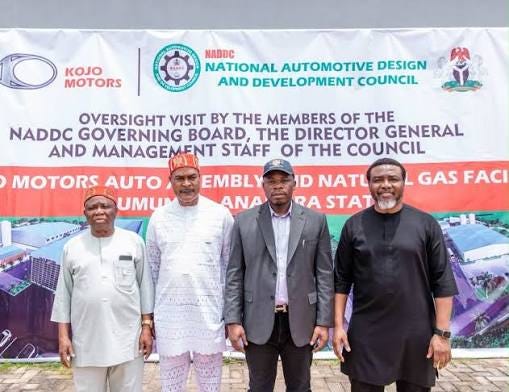
Nigeria’s automotive industry has struggled for decades. The country assembles vehicles but imports most components. Local content is minimal. In 2023, the government introduced the National Automotive Industry Development Plan. It aimed to boost local manufacturing. Implementation has been slow. The NADDC has pushed for zero duty on imported raw materials. It has also supported CNG conversion centres.
Osanipin said the future of the industry must not be defined solely by what Nigeria imports. “It must be defined by what we design, manufacture, assemble and develop,” he said. The motor fair will hold from 10 to 13 November at Eagle Square, Abuja. The theme is “Driving Nigeria’s Automotive Future.”
He said the sector offers opportunities for economic diversification, foreign exchange savings and job creation. He stressed the need for local component suppliers. “A strong automotive industry cannot rely on vehicle assembly alone,” he said. He listed NADDC’s priorities as local content development, component manufacturing, research, skills and investment in emerging technologies. He said the council is preparing for electric vehicles, alternative fuels and battery technology. CNG remains a key opportunity. He urged young Nigerians to acquire skills in the sector.
Winners: Local manufacturers, who gain support. Component suppliers, who gain demand. The NADDC, which shows direction. Exhibition organisers, who gain visibility. Losers: Importers of fully built vehicles, who face pressure. The status quo, which is challenged. No serious losers if the strategy works.
Bottom Line: Nigeria imports what it could build. The NADDC wants to change that. Local content is the goal. The motor fair will showcase progress. The strategy is sound. Implementation is the test.