


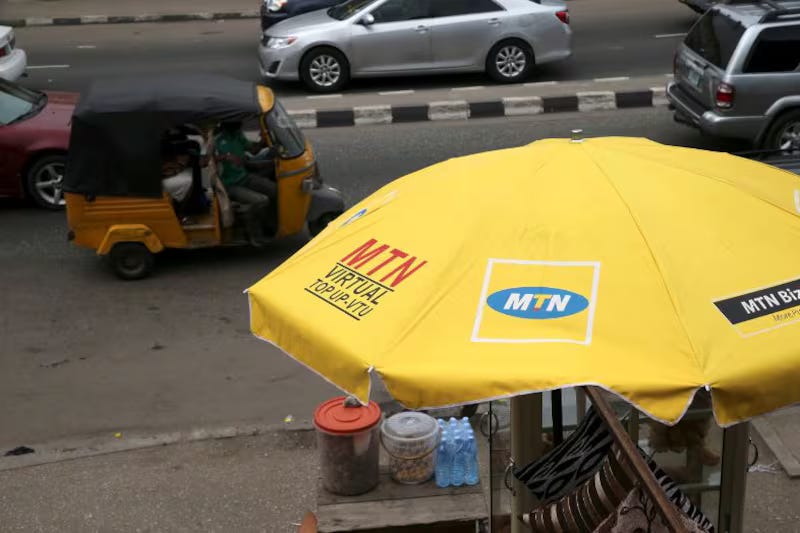
MTN Nigeria has restored its airtime lending services, ending weeks of disruption caused by a regulatory dispute. The restoration follows the Federal Competition and Consumer Protection Commission’s decision to suspend enforcement of parts of its Digital, Electronic, Online or Non-Traditional Consumer Lending Regulations. Airtel and Glo have taken similar steps.
Industry estimates suggest about 40 million subscribers rely on airtime borrowing services, with the ecosystem valued at between ₦300 billion and ₦400 billion annually. For many users, the restoration means they can once again access emergency services, banking, work and family connections during difficult times.
Gbenga Adebayo, chairman of the Association of Licensed Telecom Operators of Nigeria (ALTON), said the episode demonstrated that airtime credit is not a financial product in the way regulators initially characterised it. “It is economic infrastructure that approximately 40 million people use regularly, with the vast majority of them at the base of the economy,” Adebayo said.
ALTON warned that the disruption posed risks to consumer welfare, investor confidence and regulatory certainty in an industry worth between ₦300 billion and ₦400 billion annually. The Wireless Application Service Providers’ Association of Nigeria (WASPAN), which challenged aspects of the FCCPC regulations in court, said its legal action was aimed at protecting licensed Nigerian operators and millions of subscribers who depend on airtime and data advances.
The FCCPC maintained that its intervention was driven by consumer protection considerations. The commission classified airtime and data advances as a form of consumer lending under its regulations, arguing that stronger regulatory oversight was necessary to improve transparency and accountability in the digital credit market. Following court orders and growing opposition from industry stakeholders, the commission suspended enforcement of the disputed regulations pending the determination of the substantive suit. Ondaje Ijagwu, FCCPC Director of Corporate Affairs, said the commission decided in obedience to the rule of law while continuing to pursue its legal arguments before the court.
For a trader in Lagos who depends on airtime borrowing to stay connected with suppliers, or a student in Kano who uses it to access online learning materials, the restoration is not just a convenience. It is a lifeline. The regulatory dispute highlighted how deeply airtime lending has become embedded in Nigeria’s digital economy.
The winners: millions of Nigerian subscribers who can once again access emergency airtime and data advances; telecom operators who have regained a revenue stream; and the Nigerian economy, which benefits from restored digital connectivity. The losers: regulators whose authority has been challenged and subscribers who pay high fees for the service.
Bottom Line: MTN has restored airtime lending. Forty million Nigerians can breathe again. The regulators are still fighting. The subscribers are just trying to survive.