


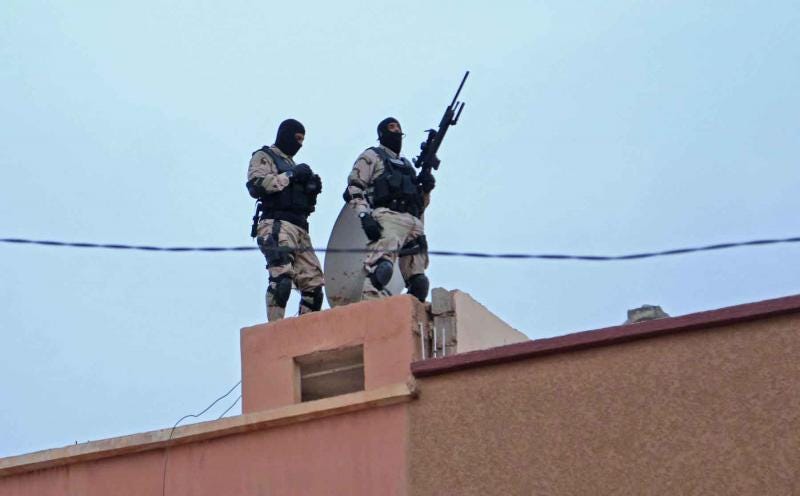
Morocco’s counterterrorism agency said it has foiled planned attacks targeting sensitive sites and public security by a militant cell linked to the Islamic State’s Sahel affiliate. The Central Bureau for Judicial Investigations (BCIJ) said 10 suspects were arrested during coordinated operations across several cities, including Casablanca, Agadir and Tetouan.
Preliminary investigations showed the suspects had pledged allegiance to Islamic State and received instructions from the group’s Sahel branch to carry out attacks inside Morocco. During searches, authorities recovered bladed weapons, military-style clothing, bomb-making manuals, chemical substances and digital materials. Investigators also found a modified vehicle suspected to have been intended for a suicide bombing or vehicle-ramming attack, along with gas cylinders and pressure cookers containing nails and electrical wiring.
The operation highlights growing security concerns over extremist groups expanding across the Sahel. Since 2015, Moroccan authorities have dismantled dozens of militant cells and arrested more than 1,000 suspected jihadists. Morocco’s success in counterterrorism is notable, but the threat continues to evolve.
The Nigerian stake is clear. Morocco’s security is linked to Nigeria’s through the shared threat of jihadist groups in the Sahel. The same groups that threaten Morocco also threaten Nigeria’s northern border. The pattern is consistent: instability in the Sahel spreads outward, affecting countries across the region.
This mirrors the 2015 attacks in Bamako, when jihadists targeted a hotel and killed 20 people, including international guests. The mechanism was different then, but the result was the same: the Sahel has become a launchpad for attacks across the region.
From a Nigerian vantage point, Morocco’s success in foiling the attack is a reminder that the threat is real and that countries must remain vigilant. Nigeria has its own jihadist threat in the North-east, and the groups there are increasingly linked to their counterparts in the Sahel. The question is whether Nigeria is doing enough to prevent attacks before they happen.
The winners: Morocco’s security forces, which disrupted the plot; Moroccan citizens, who were protected from an attack; and the international community, which benefits from Morocco’s counterterrorism efforts. The losers: the Islamic State’s Sahel affiliate, which lost a cell; and Nigeria, which faces a similar threat but lacks Morocco’s counterterrorism capacity.
Bottom Line: Morocco foiled an IS-linked attack. Nigeria is dealing with its own jihadist threat. The two are connected. The question is whether Nigeria is learning from Morocco’s example.