


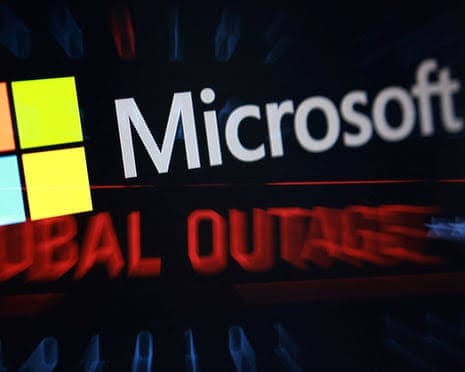
A global Microsoft 365 outage brought down email, Teams and other services for millions of users worldwide. The outage lasted more than 24 hours. More than 7.4 million outage reports were received worldwide, according to DownDetector. Microsoft said the cause was a configuration error, not a cyber-attack. It said fixes were not working as expected before recovery began.
The mechanics matter. The outage affected businesses, government agencies and Microsoft’s own employees. Those reporting issues included the US House of Representatives, an Australian spy agency, airlines in India, European government agencies, and police services, ambulances and hospitals in the UK. Some users could still access parts of the service. Recovery was patchy and slower in some regions than others.
For Nigeria, the outage is a reminder of how much of the economy depends on foreign cloud infrastructure. Banks, government agencies, universities and small businesses rely on Microsoft services for email, collaboration and document storage. When the platform fails, work stops. The country has data protection rules and a growing tech sector. It does not have domestic cloud infrastructure at scale. That gap is a strategic vulnerability.
This mirrors the 2021 Facebook outage, which cut off WhatsApp, Instagram and Facebook for hours across Nigeria. It also echoes the 2024 global IT outage linked to CrowdStrike, which grounded flights and disrupted hospitals. The difference now is duration. A 24-hour outage is not an inconvenience. It is a test of business continuity plans that most Nigerian firms do not have. The winners are Microsoft’s competitors, which gain arguments for diversification; cybersecurity firms, which gain attention; and businesses with offline backups. The losers are Microsoft, which faces reputational damage; small businesses without backups; and governments that cannot quickly switch providers.
Winners: Microsoft’s competitors; cybersecurity firms; businesses with offline backups.
Losers: Microsoft; small businesses without backups; governments unable to switch providers.
Bottom Line: A configuration error in one company can stop work worldwide. Nigeria needs domestic cloud capacity and mandatory continuity plans, not just sympathy for Microsoft’s engineers.