


Domestic petroleum marketers signalled impending retail price realignments at filling stations as international crude benchmarks surged past $100 per barrel, raising landing and replacement costs. The development follows renewed geopolitical tensions in the Middle East, which have pushed Brent crude above the psychological threshold.
The naira price of petrol is tied to global crude movements and the exchange rate, both of which are working against consumers. Higher landing costs will be passed on at the pump, adding to transport and food inflation. For a commercial driver in Lagos, the increase means higher operating costs. For a household in Kano, it means a larger share of income going to transport.
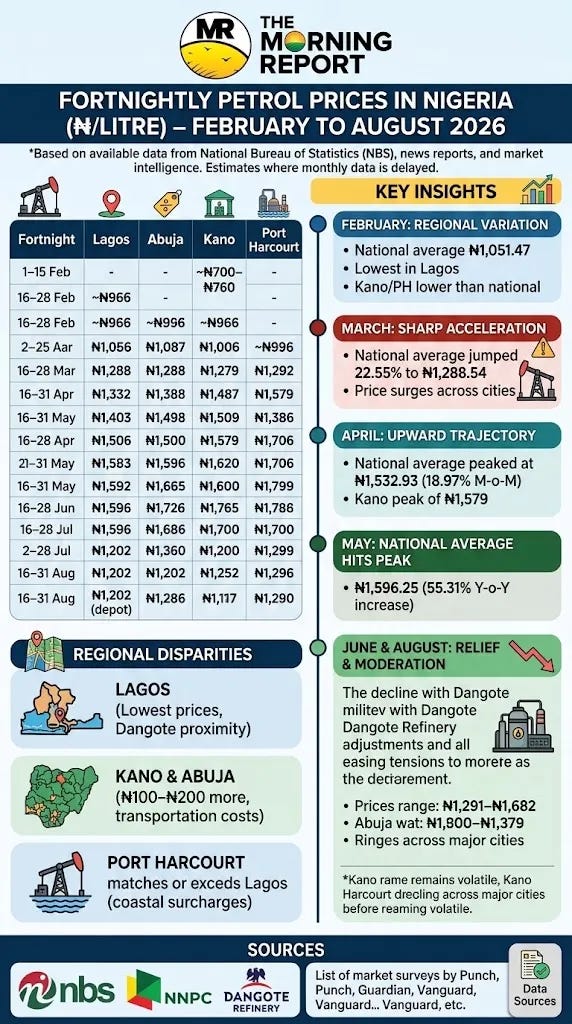
This echoes the 2022 petrol price surge, when crude prices spiked and subsidy removal exposed consumers to global markets. The mechanism then was different, but the result was the same: Nigerian consumers bearing the cost of global oil shocks.
The winners: marketers, who will pass on costs, and the government, which collects taxes on fuel. The losers: Nigerian consumers, who face higher petrol prices, and the broader economy, which suffers from higher inflation.
Bottom Line: Crude is above $100. Petrol prices will follow. The question is how much pain Nigerian consumers can absorb.