


New figures from the National Bureau of Statistics show Nigeria’s manufacturing sector grew by 3.29% in real terms in Q1 2026, nearly doubling the 1.69% recorded during the same period last year. Improved foreign exchange liquidity and rising industrial activity contributed to the growth, though manufacturers continue to urge the government to address high logistics and energy costs.
The growth is a positive sign for Nigeria’s industrialisation agenda. The manufacturing sector has long struggled with high costs and currency volatility, but the improved FX liquidity has made it easier for manufacturers to import raw materials and equipment. The growth in industrial activity reflects a gradual recovery in the sector.
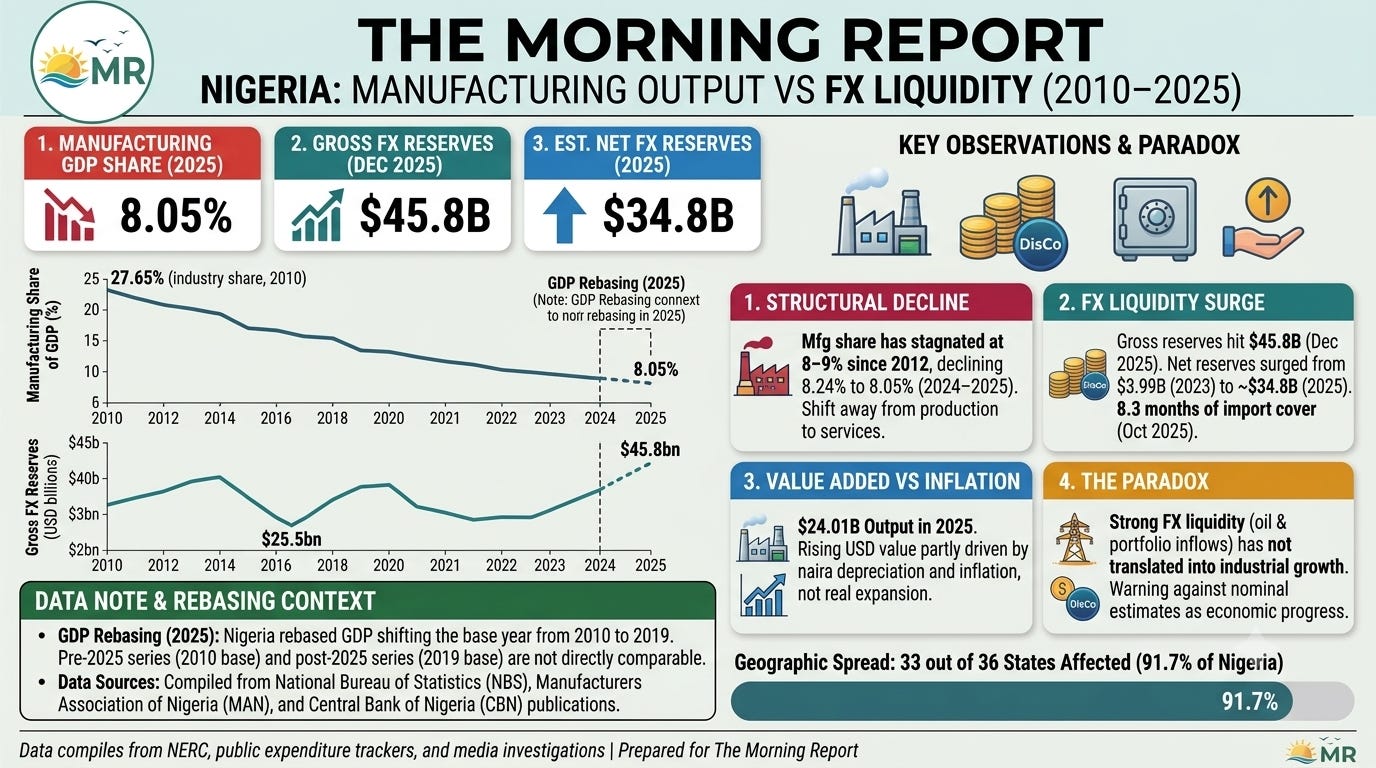
However, the growth must be seen in context. The manufacturing sector has been in decline for years, and the 3.29% growth, while welcome, is a modest recovery from a low base. Manufacturers continue to face significant challenges, including high logistics costs, unreliable electricity and weak consumer demand. The government must address these challenges if the sector is to sustain its growth.
This echoes the 2010s manufacturing growth, which also saw periods of expansion followed by decline. The mechanism then was different, but the result was the same: a sector that cannot sustain growth without structural reform.
The winners: Nigerian manufacturers, who have benefited from improved FX liquidity; and the Nigerian economy, which gains from industrial growth. The losers: the Nigerian public, who have yet to feel the benefits of the growth; and the government, which must address the structural challenges facing the sector.
Bottom Line: Manufacturing is growing at 3.29%. The improvement is real. The challenges are persistent. The question is whether the government will address the structural issues or let the recovery stall.