


The battle for Nigeria’s opposition votes ahead of the 2027 presidential election is becoming increasingly competitive. Oyo State Governor Seyi Makinde has now declared that his presidential ticket with former Department of State Services (DSS) Director-General Lawal Daura is better than the Peter Obi-Rabiu Kwankwaso combination.
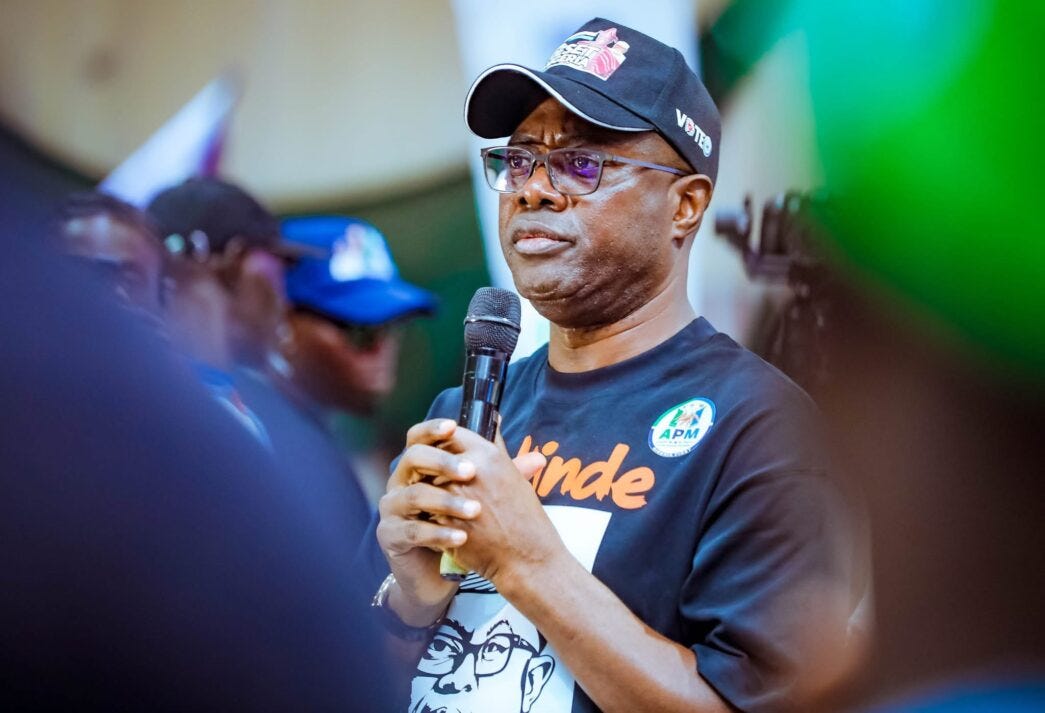
Makinde, the presidential candidate of the Allied Peoples Movement (APM), made the comparison during an appearance on the Rooftop with Kayode Okikiolu podcast published on Sunday, November 22.
Obi and Kwankwaso are the presidential and vice-presidential candidates of the Nigeria Democratic Congress (NDC).
Asked why Nigerians should choose his ticket over the Obi-Kwankwaso pairing, Makinde pointed to the historical relationship between the South-West and northern Nigeria.
He argued that the alliance between the two regions had helped maintain national stability during difficult periods.
Makinde also referenced Nigeria’s first military coup in January 1966, arguing that prominent figures from the North and South-West suffered significant losses during the crisis. He said both regions had historically played important roles in preserving the country’s stability.
But regional alliances alone do not determine whether a presidential ticket can govern effectively. Voters will also want to examine the candidates’ records, policy proposals and capacity to address Nigeria’s economic and security challenges.
Makinde cited his administration’s performance in Oyo State and what he described as the youthful energy of his ticket as further reasons Nigerians should consider his candidacy.
He also proposed a transitional government of national unity to address the country’s political and socio-economic challenges. The governor said he would lead the arrangement but would not personally benefit from its eventual outcome.
According to him, removing himself from the benefits of the transition would prevent personal interests from influencing decisions.
The declaration adds another dimension to the opposition’s struggle to build a united front against President Bola Tinubu. Atiku Abubakar, Peter Obi and Makinde have all maintained presidential ambitions, even as opposition parties discuss cooperation.
Makinde’s comparison may appeal to supporters of his candidacy, but the real test is whether he can convert his argument into nationwide support.
The winners in this emerging contest will be candidates who can present credible programmes and build alliances beyond their traditional political strongholds. The losers may be opposition parties whose competing ambitions prevent them from coordinating effectively against the ruling All Progressives Congress.
Bottom Line: Makinde believes his ticket offers a better alternative to Obi and Kwankwaso. But in an election where opposition unity remains uncertain, declaring one ticket superior is easier than convincing Nigerians that it can defeat the incumbent