


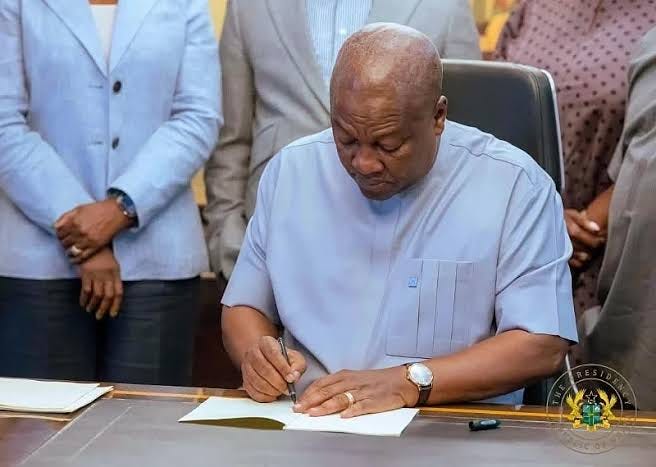
Ghanaian President John Mahama has signed 10 Bills into law after Parliament passed them, as his administration advances legislative and policy reforms. The new laws cover taxation, customs, energy, cocoa, maritime offences, national defence and justice . They include amendments to the Income Tax, Value Added Tax and Excise laws, as well as the Energy Sector Levies Act .
The legislation also establishes new frameworks for the Ghana Cocoa Board, customs administration, community service and tribunals . The Customs Bill modernises procedures for the clearance of goods and enhances revenue mobilisation . The Community Service Bill provides courts with an alternative sentencing option for non-violent offenders, allowing convicts to serve through community service rather than imprisonment . The Tribunals Bill restructures the country’s tribunal system, establishing specialised courts to handle specific categories of cases . The Maritime and Related Offences Bill criminalises piracy, illegal fishing and other maritime offences .
The Income Tax Amendment exempts people earning the minimum wage and below from paying income tax . The Ghana Cocoa Board Act includes a target of processing at least 50% of Ghana’s cocoa beans locally and ensuring cocoa farmers receive 70% of the world market price .
The winners: Ghanaian citizens, who will benefit from the reforms; and the Ghanaian economy, which gains from improved governance. The losers: those who evade taxes or engage in maritime offences; and the Nigerian government, which must learn from Ghana’s legislative reforms.
Bottom Line: Ghana is passing significant reforms. Nigeria is watching. The question is whether Nigeria will follow Ghana’s example or fall further behind.