


There was a low voter turnout during Saturday's local government election in Edo State. Our correspondent, who monitored the election, observed low turnout in most of the polling units visited. At Agbado Primary School, Oredo Ward 4, Polling Units 21 to 41, electoral materials arrived on time, but only a few voters turned out to cast their ballots. The centre was devoid of the usual crowds associated with elections, with only a handful of voters seen voting.
At Wards 8 and 10 in Egor Local Government Area, electoral materials arrived late at most polling units. As of 9 am, voters who had arrived early at Polling Units 9, 10, 11 and 12 in Ward 10, located within Ugbowo Primary School, were still waiting for electoral officials and voting materials. Meanwhile, voting commenced early at Polling Units 1 to 10 in Ward 8, located within Uselu Secondary School.
Speaking to reporters at Oredo Ward 12, Polling Unit 21, a voter, Austin Obasogie, described the exercise as peaceful. "As you can see, people are still coming to vote. I am here to vote for the All Progressives Congress, and I have cast my vote," Obasogie said.
Another voter, Mrs Blessing Odion, who voted at Polling Units 1 to 6 in Ward 12, Oredo Local Government Area, said the exercise had been seamless. She said the turnout was low but believed many voters were adopting a walk-in voting pattern, where they arrive, vote and leave immediately. She also noted that electoral materials arrived early at the polling centre.
Another voter, Mr Moses Osadolor, who voted at Polling Unit 5, said voting started early in the area because it served as the local government distribution centre for electoral materials. He also described the voter turnout as low. "But I understand some people have come and gone back," Osadolor said.
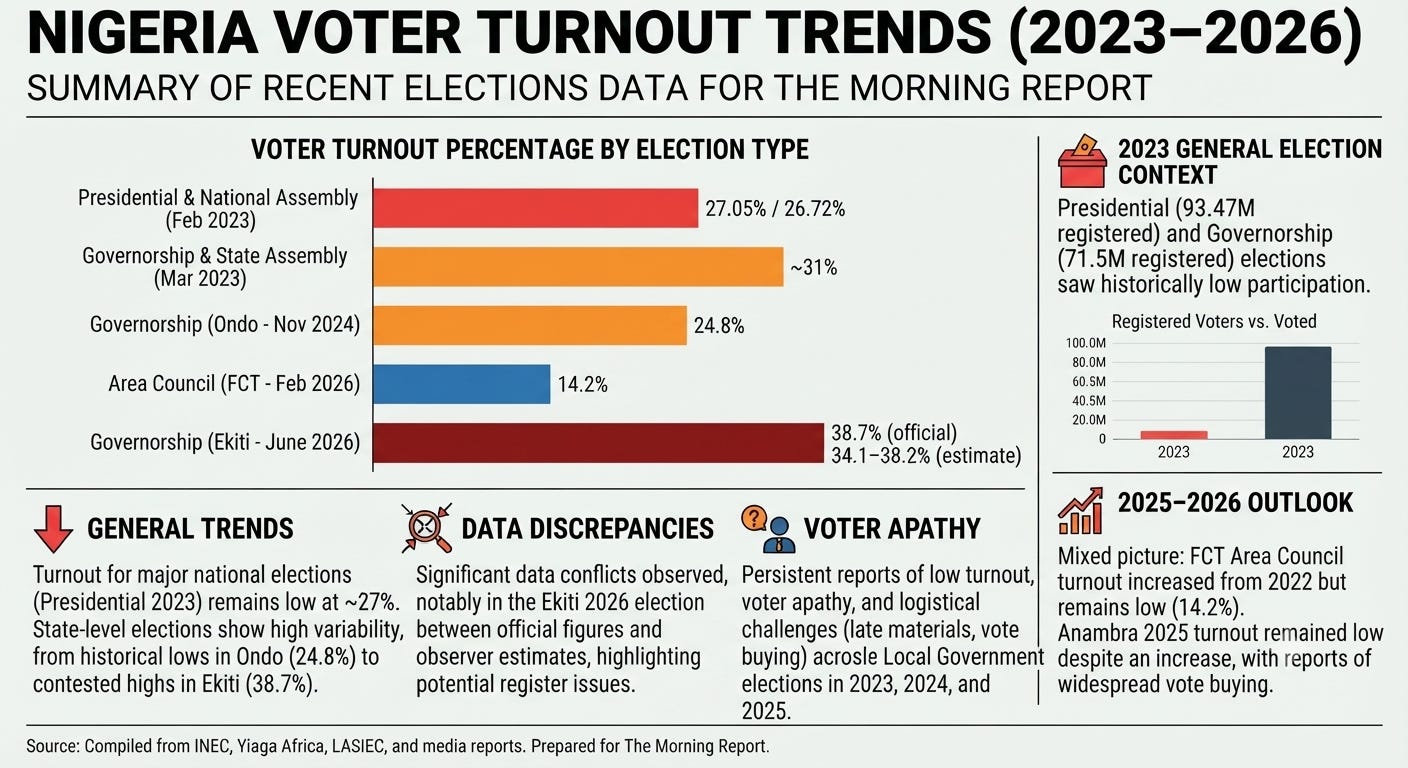
The low turnout in Edo reflects a broader trend of voter apathy across Nigeria's local government elections. Voters often view these elections as less consequential than national and state elections, and the lack of visible campaigning and media coverage compounds the disinterest. The late arrival of electoral materials in some areas further discouraged participation.
This mirrors the 2017 local government elections in Lagos, which also recorded low turnout despite the state's reputation for high political engagement. The mechanism then was different, but the result was the same: citizens choosing to stay home rather than participate in a process they perceive as inconsequential.
The winners: the political parties that have strong ground game and can mobilise their base, even in low-turnout elections. The losers: democracy itself, which suffers when citizens lose faith in the electoral process; and the people of Edo, who miss the opportunity to shape their local governance.
Bottom Line: Edo's local government election was peaceful but poorly attended. Voters stayed home. Democracy suffered. The question is why.