


Nigeria has recorded 268 deaths from Lassa fever in 2026. The case fatality rate has risen to 23.6%. It was 18.6% in the same period of 2025. The Nigeria Centre for Disease Control and Prevention released the figures. The deaths were recorded among 1,138 confirmed cases. The reporting period covers epidemiological weeks one to 40, ending 4 October 2026.
Lassa fever is endemic in Nigeria. The virus spreads through contact with food or household items contaminated by infected rodents. It also spreads person to person. Outbreaks occur annually. In 2023, Nigeria recorded 1,170 confirmed cases and 219 deaths. In 2024, the figures fell slightly. In 2025, they rose again. The disease is preventable. Early treatment saves lives. Late presentation kills. The pattern repeats because awareness is low and people seek care late.
The NCDC said confirmed cases increased from 924 in 2025 to 1,138 in 2026. Deaths rose from 172 to 268. Five states account for 88% of all confirmed cases. Ondo has 36%. Bauchi follows with 23%. Taraba has 12%. Edo has 11%. Benue has six per cent. Twenty-four states have reported at least one confirmed case across 119 local government areas. People aged 21 to 30 are the most affected group.
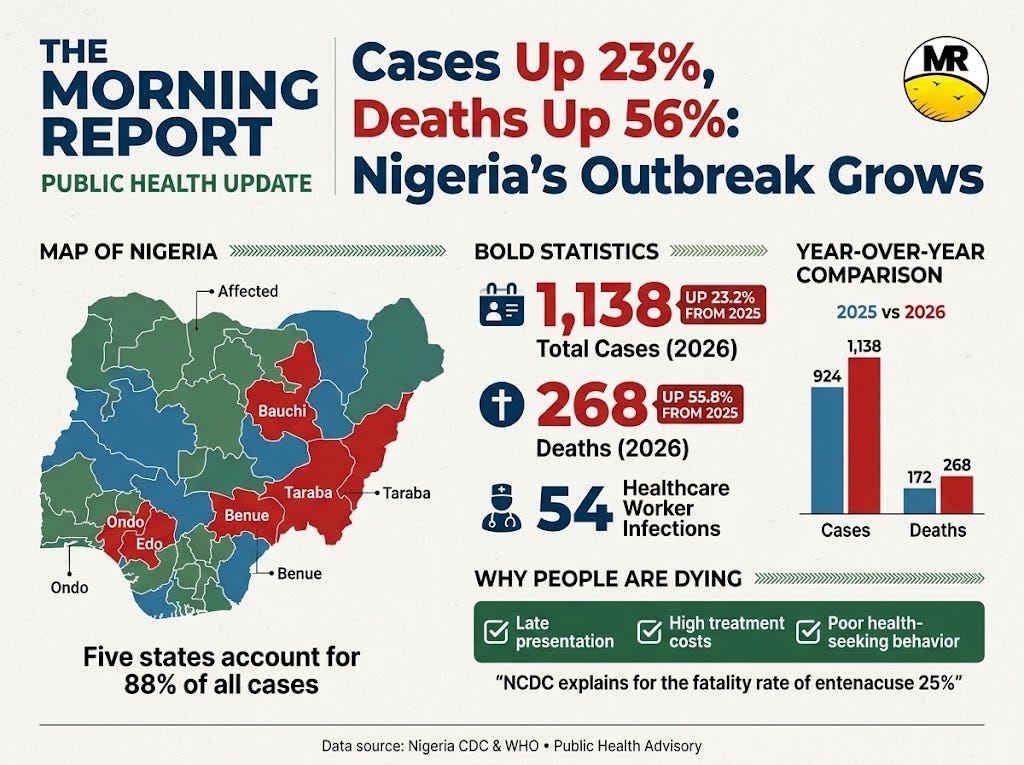
In week 40, new confirmed cases fell to three from 13 the previous week. Bauchi and Benue reported the cases. One death was recorded. The weekly fatality rate was 33.3%. The NCDC attributed the high fatality rate to late presentation, high treatment costs and poor health-seeking behaviour. No new healthcare worker infection was recorded in week 40. The cumulative number of infected health workers in 2026 is 54.
The NCDC has developed a 30-day healthcare worker protection plan with support from the World Health Organisation and the US Centers for Disease Control and Prevention. It has trained health workers in infection prevention. It has distributed personal protective equipment. It has activated incident management systems in Benue, Plateau, Kebbi, Kano and Gombe. The NCDC has deployed national rapid response teams to seven high-burden states. The NCDC has conducted community engagement activities in Edo and Ondo. The NCDC sensitised farmers and market women in Ondo.
Winners: The NCDC, which shows response capacity. Healthcare workers, who gain protection. Communities reached by sensitisation. Patients who present early, who survive. Losers: The 268 deceased and their families. Patients who present late, who die. Health workers, 54 of whom were infected. Rural communities with poor access to care. The health system, which fails to prevent outbreaks. Taxpayers, who fund emergency response instead of prevention.
Bottom Line: 268 deaths. A fatality rate of 23.6%, up from 18.6%. Five states carry almost all the burden. The NCDC is responding. But response is not prevention. Lassa fever is endemic. It kills every year. Awareness must improve. Treatment must be affordable. Until then, the deaths will continue.