


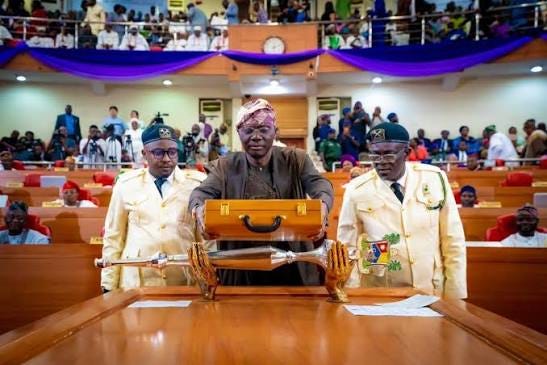
The Lagos State House of Assembly has passed the 2026 Budget Reordering Bill. The bill adjusts the total state budget to ₦4.445 trillion. Recurrent expenditure is ₦2.077 trillion. Capital expenditure is ₦2.368 trillion. The reordering prioritises transport, healthcare and security infrastructure.
Lagos budgets have grown rapidly. The 2019 budget was ₦1.168 trillion. By 2024, it had reached ₦2.267 trillion. The 2025 budget was ₦3.366 trillion. Reordering bills are routine mid-year adjustments. In 2023, the state reordered its budget to accelerate funding for the Blue Line rail. In 2024, it shifted allocations to cover rising wage bills after the minimum wage increase. The current reordering follows the same logic. Revenue projections change. Priorities shift. The Assembly adjusts.
The capital-to-recurrent ratio is notable. Capital expenditure slightly exceeds recurrent. That is unusual for Lagos. In recent years, recurrent spending has often dominated because of salary obligations and debt service. The reordering tilts toward infrastructure. Transport gets priority. That likely means continued funding for the Blue and Red Line rail networks, road rehabilitation and bus infrastructure. Healthcare and security also benefit. The details of specific project allocations have not been fully disclosed.
The fiscal context matters. Lagos generates significant internally generated revenue. It also borrows heavily. The state’s debt profile is the largest among the 36 states. Servicing that debt consumes a substantial share of recurrent expenditure. The reordering does not change the total budget size. It changes how the money is spent within that envelope. Projects that were underfunded get more. Others get less.
The Assembly’s approval is procedural. The governor’s assent is expected. The real test is execution. Lagos has a mixed record on capital projects. The Blue Line opened after years of delay. The Red Line followed a similar pattern. Roads are repaired and deteriorate again. The reordering bill is a plan. Delivery is the question.
Winners: Transport contractors, who gain project funding. Healthcare providers, who benefit from capital allocations. Security agencies, which receive infrastructure support. Residents of areas targeted for road and rail improvements. Losers: Sectors whose allocations were reduced to fund the reordering. Taxpayers, who fund the budget without guaranteed delivery. Commuters, if projects slip again. The Assembly’s oversight credibility, if the reordered funds are not tracked.
Bottom Line: Lagos reordered ₦4.445 trillion toward infrastructure. The plan is credible. The execution record is mixed. The budget is not the build.