


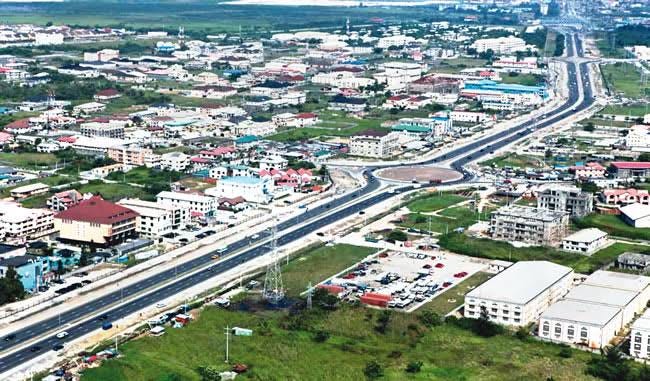
The Lagos State Government has formalised community land allocations across Sangotedo and Ibeju-Lekki as part of plans to develop a 16,300-hectare master-planned urban community. Governor Babajide Sanwo-Olu presented land allocation letters to leaders of 98 beneficiary villages during a ceremony at the Ito Omu Link Bridge in Sangotedo on Wednesday. The allocation letters formally recognise the beneficiary communities within the proposed development area and mark the commencement of the state’s implementation of the master-planned project, which is expected to support housing delivery, infrastructure development and long-term urban growth.
Sanwo-Olu said the state government is committed to ensuring that the growth of Ito Omu and neighbouring communities is driven by deliberate planning rather than unplanned urban expansion. According to the statement, the allocation letters followed the state’s acquisition of 16,300 hectares of land through the Lagos State New Towns Development Authority (NTDA) to develop and maintain a master-planned urban community.
“The future of Lagos cannot be built on unplanned expansion. It must be built on deliberate planning, appropriate infrastructure, secure communities and opportunities for our people to prosper,” Sanwo-Olu said. He added that the project aligns with the state’s THEMES+ Agenda and is designed to deliver stronger land tenure, improved infrastructure, new economic opportunities and better living conditions while preserving the heritage and identity of the host communities.
Urban Planner Tpl. Niyi Aderohunmu described the issuance of the land allocation letters as one of the first practical steps towards implementing a master-planned new town rather than a routine administrative exercise. According to him, the letters formally recognise the interests of host communities within the development framework by converting customary land claims into documented allocations.
The Lekki land map redraw is a significant step towards orderly urban development in Lagos. The state has long struggled with unplanned expansion, and the master-planned community approach offers a model for sustainable growth. However, the success of the project will depend on implementation and the resolution of land disputes.
This echoes the 2010s Eko Atlantic development, which also sought to create a master-planned community on reclaimed land. The mechanism then was different, but the result was the same: a bet on planned urban development.
The winners: the 98 beneficiary villages, which have gained formal recognition; and the Lagos State Government, which has taken a step towards orderly urban development. The losers: those who may be displaced by the development; and the Nigerian public, who must wait for the benefits to materialise.
Bottom Line: Lagos has redrawn the Lekki land map and issued allocation letters to 98 villages. The goal is planned urban growth. The question is whether the plan will be implemented or remain on paper.